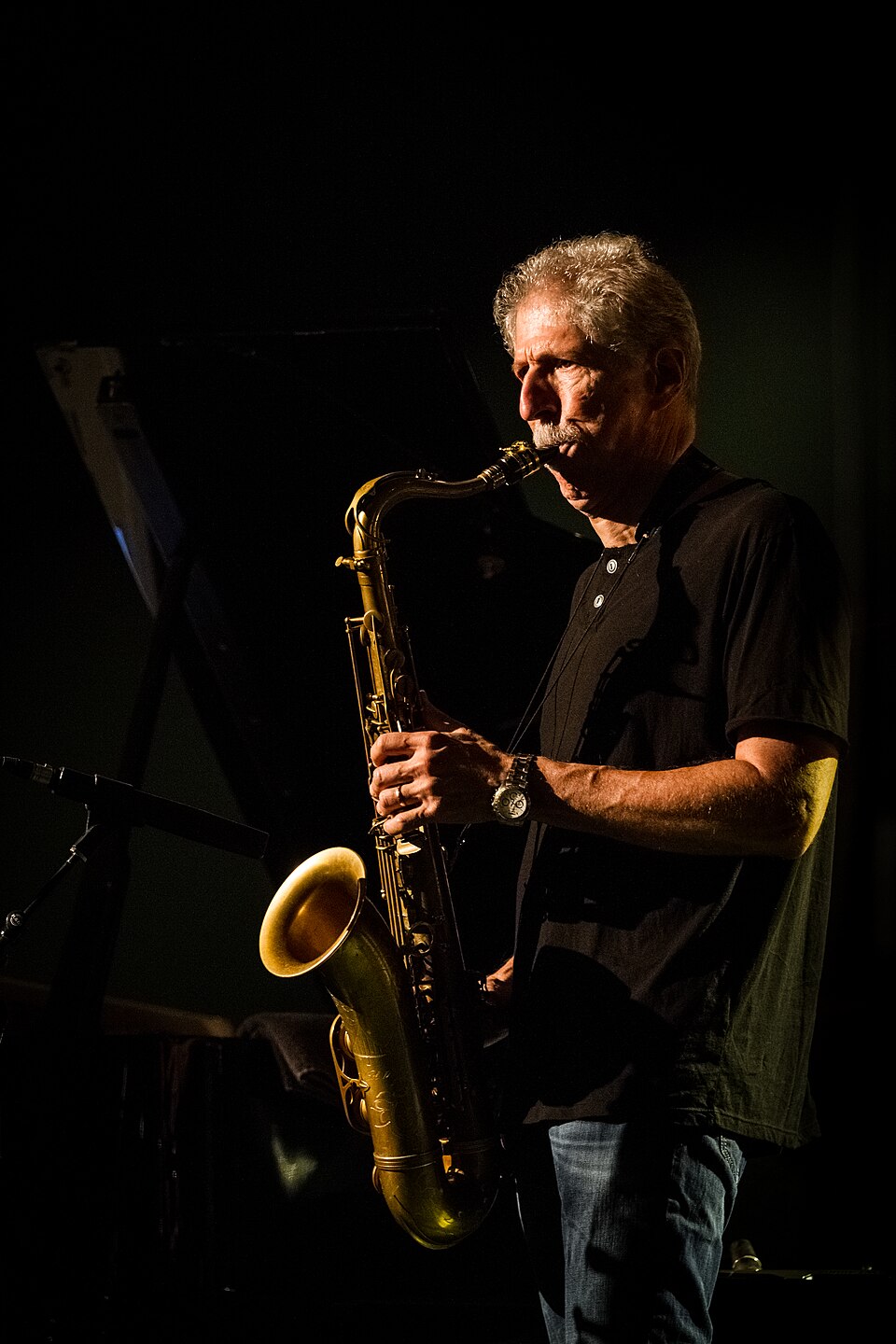
Bob Mintzer (b. 1953)
Biography
Bob Mintzer was born in New Rochelle, New York, and studied at Hartt School of Music and Manhattan School of Music. He’s an acclaimed saxophonist, composer, and arranger who has led his own big band since 1983 while being a long-time member of the Yellowjackets. Mintzer has played with Buddy Rich, Thad Jones/Mel Lewis Orchestra, and numerous other ensembles. He’s released over a dozen big band albums and countless small group recordings. Mintzer is also an influential educator, teaching at USC and creating widely-used instructional materials. His arrangements have been performed by bands worldwide. Mintzer’s work combines bebop sophistication with contemporary grooves and production, demonstrating that big band jazz can remain vital and relevant. His prolific output and consistent quality have made him one of contemporary jazz’s most important arranger-educators.
Musical Style
Mintzer’s arranging style combines bebop harmonic sophistication with contemporary grooves, featuring complex yet accessible writing with strong melodic content and exciting rhythmic energy. His arrangements demonstrate complete mastery of big band writing, with excellent section writing and sophisticated voicings. What distinguishes Mintzer’s work is its combination of intellectual substance and accessibility—his charts challenge musicians while remaining engaging for listeners. His voicings are modern and colorful, incorporating contemporary harmonies while maintaining jazz tradition. Mintzer writes beautifully for saxophones (his own instrument), creating rich section textures and effective solo features. His arrangements balance composition and improvisation perfectly, providing substantial written material while leaving room for extended solos. Mintzer’s style represents contemporary big band arranging at its best: sophisticated, swinging, and musically substantial.
Orchestration Techniques
Mintzer’s voicing approach combines traditional drop-2 and drop-3 structures with upper-structure triads, creating rich harmonies that exploit the full range of the big band. His saxophone section writing demonstrates particular sophistication, employing five-part voicings with the baritone frequently independent rather than doubling the lead, allowing for wider spread voicings that maintain clarity. Sectional writing utilizes extensive soli passages where the entire saxophone section plays harmonized bebop lines in tight rhythmic unison, often with brass punctuations providing harmonic support on chord tones. Contrapuntal techniques include two-part inventions between brass and saxophones, with each section maintaining independent melodic interest while creating composite harmonies at points of vertical alignment. The brass register usage favors the middle-to-upper tessitura for trumpets, with trombones occupying the tenor range and bass trombone providing fundamental support, creating a balanced and powerful sound. Mintzer employs extensive unison and octave doublings during thematic statements, thickening melodic lines while reserving full harmonizations for developmental passages. Rhythmic notation is meticulous, with specific articulation markings for bebop phrasing, including roof accents, staccato dots, and legato slurs that ensure stylistic consistency across the ensemble. Textural approaches alternate between dense tutti passages and transparent duo or trio textures, creating formal variety through orchestrational density. His preferred ensemble configuration is the standard seventeen-piece big band augmented with Latin percussion, allowing for rhythmic complexity within traditional jazz orchestration. Dynamic architecture employs sudden dynamic contrasts alongside gradual builds, using subito piano and crescendo passages to create dramatic tension. Mintzer’s signature technique involves harmonizing scalar passages in fourths and fifths rather than traditional tertian harmony, creating an open, modern sound particularly effective in modal compositions.
Top Albums
Bob Mintzer Big Band - “Incredible Journey” (1985)
Mintzer’s early big band arrangements showcase his distinctive voice. His charts feature bebop sophistication with contemporary grooves and production values. What makes these arrangements notable is their energy and accessibility—Mintzer writes complex music that grooves hard and communicates directly. His composition “Incredible Journey” demonstrates his gift for creating memorable melodies with sophisticated harmonic settings and exciting rhythmic frameworks. The voicings prove Mintzer’s complete understanding of big band orchestration.
Bob Mintzer Big Band - “Latin from Manhattan” (1998)
Mintzer’s arrangements incorporating Latin rhythms demonstrate his versatility and his understanding of Afro-Cuban music. His charts feature authentic Latin percussion integrated with big band, creating exciting, danceable yet sophisticated music. What’s particularly impressive is Mintzer’s respect for Latin traditions—his arrangements honor rhythmic authenticity while incorporating jazz harmonies and improvisation. His composition “Rhythm of the Americas” showcases his ability to create extended forms that sustain interest through rhythmic and harmonic development. The album won Grammy consideration and represents peak Latin jazz big band writing.
Bob Mintzer Big Band - “For the Moment” (2016)
Mintzer’s later arrangements show continued evolution and refinement. His charts maintain his signature sophistication while incorporating even more contemporary elements. What makes these arrangements fascinating is their maturity—Mintzer’s decades of experience result in writing of remarkable economy and effectiveness. His arrangement of “Eternal Melody” demonstrates how sophisticated harmonies and simple melodic beauty can coexist. The album proves Mintzer remains vital and creative, continually finding fresh approaches to big band jazz while maintaining high standards.