Benny Golson (b. 1929)

Biography

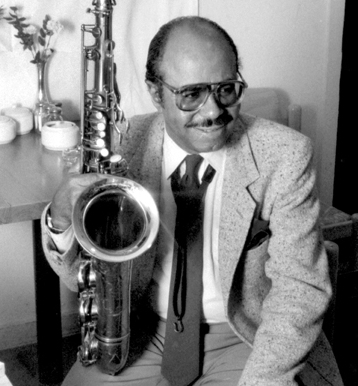
Benny Golson was born in Philadelphia and grew up immersed in that city’s rich jazz tradition. He studied at Howard University before beginning his professional career with Bull Moose Jackson’s R&B band. Golson played tenor saxophone with Dizzy Gillespie, Art Blakey’s Jazz Messengers, and others while establishing himself as one of hard bop’s premier composers. His compositions “I Remember Clifford” (a tribute to Clifford Brown), “Killer Joe,” “Along Came Betty,” and “Whisper Not” became jazz standards. In 1959, Golson co-founded The Jazztet with Art Farmer, creating sophisticated small group arrangements. He later moved to Los Angeles for film and television work before returning to active jazz performance. Now in his 90s, Golson remains an elder statesman of jazz.

Musical Style

Golson’s arranging style combines bebop harmonic sophistication with memorable melodies and blues feeling. His arrangements feature clear structures that balance composition and improvisation perfectly. Golson had a gift for writing melodies that were both sophisticated and singable—his tunes had complex harmonies yet remained accessible. His arrangements for The Jazztet demonstrated his ability to create rich textures with limited forces, using counterpoint and carefully voiced harmonies. Golson’s style emphasized melody and form, creating arrangements that worked as compositions while providing excellent frameworks for improvisation. His voicings were warm and full, influenced by his experience as a saxophonist. Golson’s work represented hard bop arranging at its finest—sophisticated yet soulful, complex yet accessible.
Orchestration Techniques

Golson’s voicings demonstrate a preference for close-position structures with chromatic inner voice movement, particularly employing diminished passing chords to create smooth voice leading between dominant seventh structures. His trumpet and saxophone unison writing in octaves creates a characteristically bright, penetrating sound that projects the melody clearly over rhythm section accompaniment. Sectional soli passages in Golson’s charts often employ four-part block voicing with the lead doubled an octave below, producing the classic hard bop section sound with enhanced bottom presence. Contrapuntal writing features heavily in his arrangements, with independent countermelodies assigned to trombone or baritone saxophone moving in contrary motion to the primary melodic line. His use of pedal tones is particularly effective, with bass or baritone saxophone sustaining root or fifth while upper voices move through sequential harmonic progressions. Golson favors hocket technique in call-and-response passages between brass and saxophone sections, creating conversational textures that maintain rhythmic momentum. Register distribution shows careful attention to the middle voices, with alto saxophone often carrying harmonically critical tones (thirds and sevenths) in the optimal projection range of A4 to D5. Rhythmic devices include anticipatory figures on the “and” of four leading into downbeat melodic statements, creating forward propulsion without disrupting the fundamental pulse. Tutti passages in his arrangements employ pyramid voicings with staggered entrances from low to high instruments, building harmonic density gradually. His signature orchestration technique involves using muted brass (straight mutes) doubling with saxophones in unison to create a composite timbre that sounds larger and more complex than the actual instrumentation.

Top Albums

Benny Golson - “The Modern Touch” (1957)

This early album showcases Golson’s arranging for larger ensemble. His charts feature sophisticated harmonies with strong melodic content. What makes these arrangements special is their balance—Golson writes enough to create interest without overwhelming the soloists. His arrangement of “Stablemates” demonstrates his gift for creating exciting, hard-swinging charts. The voicings are rich yet transparent, allowing individual voices to shine through ensemble passages.

The Jazztet - “Meet the Jazztet” (1960)

Golson’s arrangements for this sextet represent his mature style. “I Remember Clifford” and “Killer Joe” showcase his gift for creating memorable melodies supported by sophisticated harmonies. What’s particularly notable is how Golson creates fullness with just six pieces—his arrangements sound larger than the personnel would suggest. The interplay between arrangement and improvisation is perfect, with composed sections flowing naturally into solos. This album influenced countless small group arrangers.

Benny Golson - “Whisper Not” (2006)

Recorded in his late 70s, this album proves Golson’s arranging powers remained intact. His charts for octet demonstrate continued evolution while maintaining his essential style. What makes these arrangements fascinating is their maturity—Golson’s decades of experience result in arrangements of remarkable economy and effectiveness. Every note serves a purpose, and the balance between ensemble and solo is perfect. The album shows that great arranging transcends age and fashion.