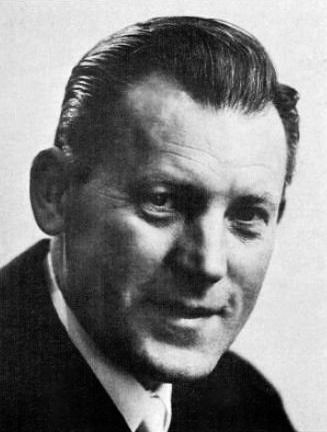
Ray Conniff (1916-2002)
Biography
Joseph Raymond Conniff was born in Massachusetts and played trombone before focusing on arranging. He arranged for Artie Shaw, Bob Crosby, and others in the 1940s before joining Columbia Records as arranger in the 1950s. Conniff developed a distinctive style featuring wordless vocals singing in harmony with instrumental sections, achieving massive commercial success. While primarily known for easy listening arrangements, Conniff’s jazz arranging in the 1940s was sophisticated and swinging. He became one of the world’s best-selling recording artists through his unique approach to popular music arrangement. Conniff’s work demonstrated that jazz arranging skills could translate to enormous commercial success.
Musical Style
Conniff’s 1940s arranging style was sophisticated swing with excellent section writing and clear structures. His arrangements featured strong melodic lines supported by well-crafted harmonies. Conniff had a gift for creating smooth, professional arrangements that swung without being aggressive. His section writing, particularly for reeds, was exemplary—clear, balanced, and idiomatic. Conniff understood how to create arrangements that satisfied both dancers and listeners, maintaining musical interest without becoming too complex. His later signature style (vocals doubling instruments) wasn’t present in his 1940s jazz work, which was straightforward sophisticated swing arranging. Conniff’s jazz arrangements demonstrated excellent craftsmanship and professional polish, representing mainstream swing arranging at high levels.
Orchestration Techniques
Conniff’s orchestration technique exemplifies professional craftsmanship through balanced sectional writing, smooth voice-leading, and polished ensemble blend that represents mainstream swing arranging at its most refined level. His characteristic voicing approach employs standard four-part close-position saxophone voicings with careful attention to voice-leading, ensuring each inner voice moves smoothly by step or small interval while the lead voice carries melodic content, creating the blended, professional sound essential for commercial swing contexts. Conniff’s sectional writing maintains clear antiphonal relationships between brass and reeds, with each section operating in its optimal register—trumpets around written high B-flat, trombones in their warm middle range, saxophones in close harmony—to ensure maximum blend and minimal strain on performers during extended performances. His contrapuntal approach is relatively straightforward, employing parallel motion between sections with occasional contrary bass lines to provide harmonic direction, prioritizing clarity and accessibility over linear complexity. The rhythmic architecture emphasizes precise section articulation with uniform attack points and releases notated specifically through staccato dots, tenuto marks, and accent indicators that ensure ensemble precision essential for dance band performance. Conniff’s use of instrumental registers follows conventional swing practice systematically, avoiding extreme high or low writing that might compromise blend or fatigue performers, instead exploiting each instrument family’s optimal singing range for maximum tonal beauty. His dynamic scheme employs graduated crescendi through the traditional big band layering—rhythm section foundation supporting reed section entrance followed by brass climax—creating predictable but effective formal arcs that satisfy dancer expectations. Brass voicings feature drop-2 configurations as standard practice, creating harmonic fullness while maintaining clarity, with occasional open-position voicings for ballad passages that require more spacious sound. Conniff employs functional harmony with smooth voice-leading through secondary dominants and standard II-V-I progressions, avoiding harmonic adventurousness in favor of accessibility and broadcast-friendly clarity. His saxophone writing is particularly polished, with five-part voicings moving in close position where baritone doubles roots while upper voices create rich harmonic color without density. Conniff’s use of mutes is functional rather than coloristic—straight mutes for softer passages, open brass for climaxes—serving dynamic requirements rather than timbral experimentation. His signature technique involves creating arrangements with impeccable professional polish where every section entrance is balanced, every transition smooth, and every phrase shaped with attention to dynamic nuance, demonstrating that sophisticated arranging craftsmanship can serve commercial contexts without compromising musical integrity.
Top Albums
Artie Shaw Orchestra - “Artie Shaw and His Orchestra” (1940s, Conniff arrangements)
Conniff’s arrangements for Shaw demonstrate his sophisticated swing style. His charts feature excellent reed section writing and smooth transitions. What makes Conniff’s arrangements for Shaw notable is their professional polish—every detail is carefully considered and executed. His voicings are clear and balanced, creating full ensemble sounds without muddiness. These arrangements show Conniff’s gifts before his commercial easy-listening success.
Bob Crosby Orchestra - “Bob Crosby’s Bobcats” (1940s, Conniff arrangements)
Conniff’s arrangements for Crosby’s Dixieland-influenced band show his versatility. He adapted his sophisticated approach to more traditional jazz contexts. What’s interesting is how Conniff maintained his professional standards while honoring Crosby’s more traditional aesthetic. His arrangements prove that sophisticated arranging techniques can enhance any style without overwhelming it.
Ray Conniff - “‘S Wonderful!” (1956, later work)
While primarily from his easy-listening period, this album showcases Conniff’s arranging evolution. His charts still demonstrate the jazz skills developed in the 1940s, now applied to his signature vocal-instrumental style. What makes this relevant is hearing how Conniff’s jazz arranging background informed his commercial work—the voicings, transitions, and structures reflect sophisticated jazz arranging even in pop contexts.