Jazz arranging · Swing & the Big Band Era
RalphBurns
1922–2001 arranger · composer · orchestrator
Burns's arranging style evolved from bebop-influenced progressive jazz in the 1940s to sophisticated studio arranging in…
.jpg)
- Predominant era
- Swing & the Big Band Era
- Lifespan
- 1922–2001
- Signature
- iridescent color
Bio · 42 words
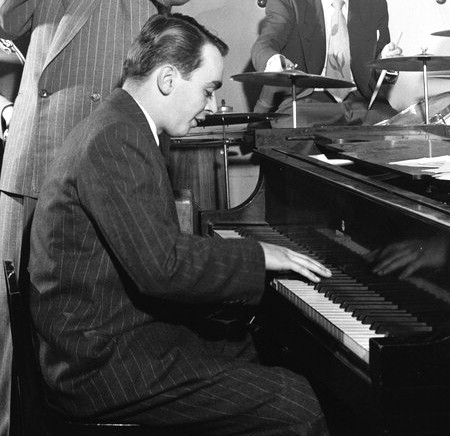
Ralph Joseph P. Burns was born in Newton, Massachusetts, and studied at the New England Conservatory. He joined Woody Herman's First Herd as a pianist in 1944 and became the band's chief arranger, creating some of the era's most progressive jazz arrangements.
01
Musical style
Sound DNA
Five shared dimensions make the arranger’s musical priorities visible at a glance.
Iridescent
Instrumental color leads the design.
Balanced
Space and activity stay in balance.
Expansive
Wide spans define the orchestral frame.
Ornate
Dense detail rewards close listening.
Elastic
The rhythmic feel expands and contracts.
02
Orchestration
Technique deck
Select a card to spotlight a device drawn from this arranger’s orchestral language.
03
Music first
Scores & orchestras
Switch recordings to compare how this arranger’s musical priorities shape each orchestral profile.
The Thundering Herds · 1945-1947
Apple Honey,
Burns's arrangements for Herman's First Herd including "Apple Honey," "Bijou," and "Early Autumn" represent progressive jazz at its finest.
Listen forNotice how color shapes the orchestral profile.
Find listening example on YouTubeProfile derived from the arranger’s documented style and recording notes; exact instrumentation is not asserted.
The Second Herd · 1948-1950
Four Brothers
Burns continued arranging for Herman's Second Herd (the "Four Brothers" band), adapting to the new personnel.
Listen forNotice how color shapes the orchestral profile.
Find listening example on YouTubeProfile derived from the arranger’s documented style and recording notes; exact instrumentation is not asserted.
Focus · 1961
Focus
Burns wrote extended arrangements featuring Getz with string orchestra, creating one of jazz's most successful fusions of jazz improvisation and classical orchestration.
Listen forNotice how color shapes the orchestral profile.
Find listening example on YouTubeProfile derived from the arranger’s documented style and recording notes; exact instrumentation is not asserted.
04
Start here
Three essential albums
One line each—enough context to choose the next listen.
- 01 1945-1947 The Thundering HerdsWoody Herman Burns's arrangements for Herman's First Herd including "Apple Honey," "Bijou," and "Early Autumn" represent progressive jazz at its finest.
- 02 1948-1950 The Second HerdWoody Herman Burns continued arranging for Herman's Second Herd (the "Four Brothers" band), adapting to the new personnel.
- 03 1961 FocusStan Getz Burns wrote extended arrangements featuring Getz with string orchestra, creating one of jazz's most successful fusions of jazz improvisation and classical orchestration.