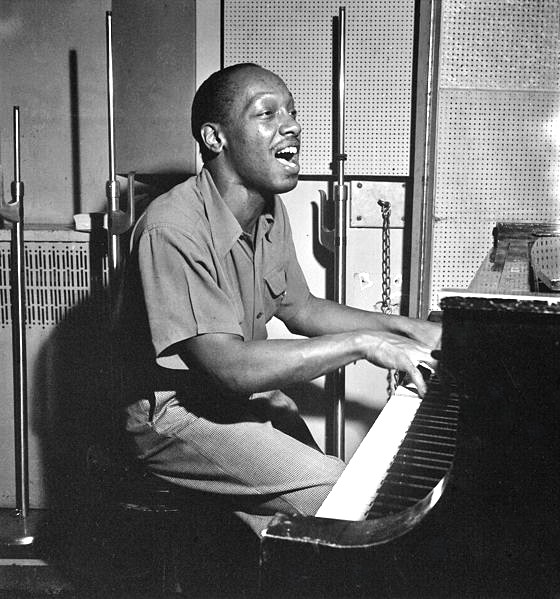
Tadd Dameron (1917-1965)
Biography
Tadley Ewing Peake Dameron was born in Cleveland, Ohio, into a musical family. He worked as a pianist and arranger for several bands including those of Harlan Leonard, Count Basie, and Billy Eckstine before emerging as one of bebop’s most important arrangers and composers. Dameron wrote for big bands while composing standards including “Hot House,” “Lady Bird,” and “If You Could See Me Now.” He led his own groups intermittently and arranged for jazz at the Philharmonic, Dizzy Gillespie, and others. Drug problems led to incarceration in the late 1950s, but Dameron returned to music before dying of cancer in 1965. He is recognized as the romantic voice of bebop and a major influence on countless arrangers.
Musical Style
Dameron’s arranging style brought romantic lyricism to bebop’s complex harmonies and rhythms. While bebop was often aggressive and angular, Dameron’s arrangements featured warm, singing melodies and lush harmonies. He had a particular gift for combining bebop’s harmonic sophistication with accessible, beautiful melodies. Dameron’s voicings were rich and full, often using the entire ensemble to create thick harmonic textures. He was masterful at writing countermelodies and inner voices that enriched the overall sound. His arrangements balanced written and improvised sections perfectly, giving soloists solid frameworks while maintaining compositional interest. Dameron pioneered techniques that became standard in modern jazz arranging, including using substitute chord progressions and writing specific backgrounds for soloists. His style influenced hard bop, cool jazz, and all subsequent mainstream jazz arranging.
Orchestration Techniques
Dameron’s orchestration technique centers on thick, close-position voicings in the saxophone section, typically employing five-part harmony with the baritone doubling roots or fifths rather than participating in upper structure tensions. His brass writing features drop-2 voicings as a foundational device, allowing trumpets to maintain brilliance in their optimal register while trombones fill the harmonic middle, creating warmth without muddiness. Dameron frequently employs pyramid voicings where lower instruments sustain longer note values while upper voices articulate rhythmic figures, producing a layered textural effect that became his trademark sound. His sectional writing balances tutti passages with call-and-response figures between brass and reeds, often using the saxophone section to answer trumpet statements in parallel thirds or sixths. Contrapuntally, Dameron writes independent bass lines that move in contrary motion to the melody, frequently employing chromatic approach tones and tritone substitutions that create forward harmonic momentum. His use of secondary dominants and diminished passing chords provides constant harmonic interest while maintaining smooth voice-leading in inner parts. The trumpet section typically operates in close position within the staff, avoiding extreme upper register writing in favor of rich middle-register sonorities that blend with reed colors. Dameron’s rhythmic notation emphasizes legato phrasing with specific articulation on bebop-derived lines, using tenuto marks and slurs to ensure his melodies sing rather than punch. His dynamic architecture builds through orchestral density rather than volume alone, adding instruments progressively to create climactic moments. Background figures behind soloists employ sustained harmonies with gentle rhythmic punctuation, using cup mutes in brass to create pillowy accompaniment that supports without overwhelming the improviser.
Top Albums
Tadd Dameron - “Fontainebleau” (1956)
This album showcases Dameron’s arranging at its peak, featuring his octet playing arrangements that perfectly balance bebop complexity with melodic beauty. The title track demonstrates his gift for creating sophisticated, multi-sectioned compositions with smooth transitions. What’s particularly striking is how Dameron’s arrangements give each horn player interesting material—there are no filler parts. His voicings are thick and rich despite the small ensemble, showing his skill at creating fullness with limited forces. “Flossie Lou” and “Bula-Beige” demonstrate his range from hard-driving bebop to lyrical ballads.
Dizzy Gillespie - “Groovin’ High” (1945-1946, Dameron arrangements)
Dameron’s arrangements for Gillespie’s big band, including “Good Bait” and “Our Delight,” helped define bebop’s big band sound. These arrangements translated bebop’s complexity for large ensemble while maintaining its essential character. What’s remarkable is how Dameron created ensemble passages as exciting as bebop solos—his riffs and shout choruses have the same angular quality as bebop improvisation. The arrangements demonstrate that bebop could work in big band format with the right arranger. Dameron’s charts for Gillespie influenced all subsequent modern jazz big band writing.
Clifford Brown and Max Roach - “At Basin Street” (1956, Dameron arrangements)
Dameron arranged several pieces for this quintet including “I’ll Remember April” and his own “If You Could See Me Now.” What makes these arrangements special is how Dameron’s scoring for the Brown-Roach group created mini-big band effects with just trumpet and tenor saxophone. His arrangement of “I’ll Remember April” features intricate two-horn counterpoint that sounds fuller than it should. The album showcases Dameron’s adaptability—he could write for any size ensemble while maintaining his harmonic sophistication and melodic gift.