Gerry Mulligan (1927-1996)
Biography
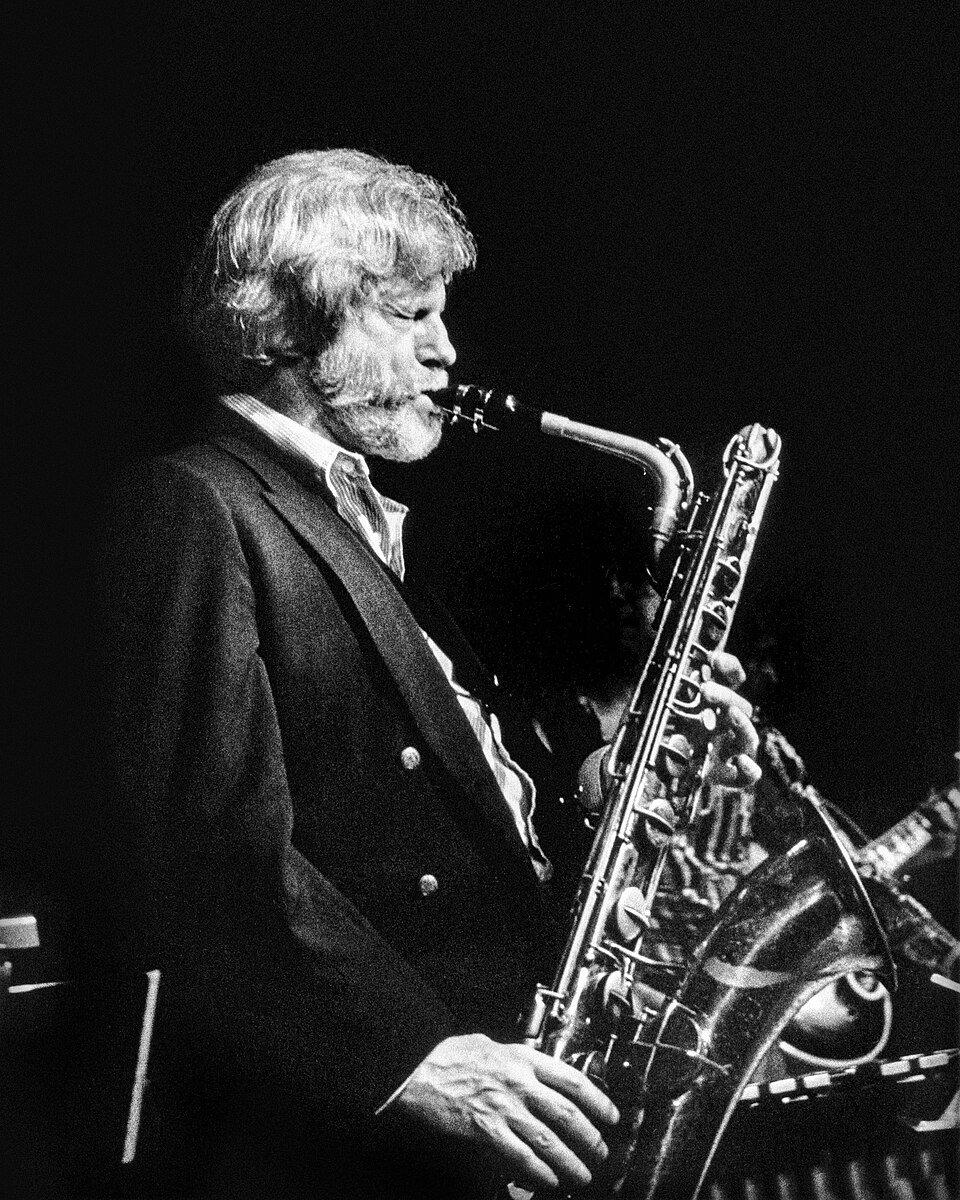
Gerald Joseph Mulligan was born in Queens, New York, and started arranging as a teenager. He arranged for Gene Krupa and Claude Thornhill before becoming a key figure in the Miles Davis Birth of the Cool project (1949-1950), where his arrangements helped define cool jazz. Mulligan moved to California in the early 1950s and formed his famous pianoless quartet with Chet Baker, revolutionizing small group jazz. He continued leading various ensembles, from quartets to big bands, while composing and arranging prolifically. Mulligan’s baritone saxophone playing made him one of jazz’s most recognizable voices. He remained active until his death from complications of knee surgery.
Musical Style
Mulligan’s arranging style emphasized linear counterpoint over vertical harmony, creating arrangements where multiple melodic lines interweaved. His Birth of the Cool charts demonstrated his gift for creating complex textures with modest forces. Mulligan favored transparency and lightness over power and density. His arrangements often featured walking bass lines and contrapuntal writing that created motion without relying on traditional chord progressions. He had a particular gift for writing for brass instruments, understanding their tonal qualities from his own playing. Mulligan’s style incorporated elements of baroque counterpoint within jazz contexts. His arrangements were sophisticated yet accessible, intellectual yet swinging. He preferred understatement to bombast, creating arrangements that revealed more with repeated listening.
Orchestration Techniques
Mulligan’s orchestration technique prioritizes linear counterpoint over vertical harmony, creating transparent textures where individual instrumental lines maintain independence while combining to produce harmonic movement through voice-leading rather than block chord progression. His characteristic voicing approach employs spread voicings with wide intervals between adjacent voices, allowing each instrument’s timbral identity to remain distinct within the ensemble texture, particularly effective in the nonet instrumentation of the Birth of the Cool sessions. Mulligan’s sectional writing integrates unusual instrumental combinations—French horn with tuba and baritone saxophone, trumpet with bass clarinet—creating mixed timbral groupings that produce chamber-music transparency rather than traditional big band density. His contrapuntal technique derives from baroque models, with melodic lines moving in contrary and oblique motion, creating harmonic implications through the intersection of independent voices rather than stated chord structures. The rhythmic architecture features walking bass lines that provide harmonic foundation while upper voices articulate independent melodic figures, creating polyrhythmic textures through careful coordination of attack points. Mulligan’s use of instrumental registers favors the middle range for warmth and blend, with brass instruments written in their lyrical registers rather than extreme highs, and reeds operating in their most vocal ranges. His dynamic scheme emphasizes restraint and subtlety, with mezzo-forte as typical dynamic level and climaxes achieved through textural density rather than volume, creating the “cool” aesthetic that defined West Coast jazz. Brass writing in Mulligan’s scores often employs muted colors—cup mutes producing soft, rounded tones—that blend with reed sections rather than contrasting sharply. He frequently writes two-part counterpoint where melody and countermelody have equal weight, avoiding accompaniment textures in favor of democratic voice distribution. Mulligan’s harmonic motion is generated through linear voice-leading, with each voice resolving tensions independently while collectively creating chord progressions through accumulated movement. His woodwind writing exploits the blend between baritone saxophone and tuba, creating bass register combinations that provide warmth without heaviness. Mulligan’s signature technique involves creating ensemble passages where no instrument merely accompanies but each contributes melodic content, producing arrangements where removing any single voice would fundamentally alter the texture, demonstrating his commitment to contrapuntal integrity over harmonic convenience.
Top Albums
Miles Davis - “Birth of the Cool” (1949-1950, Mulligan arrangements)
Mulligan’s arrangements including “Jeru,” “Venus de Milo,” and “Rocker” helped define cool jazz. What makes these arrangements revolutionary is their approach—instead of hot, aggressive swing, Mulligan created cool, sophisticated counterpoint. His arrangement of “Venus de Milo” demonstrates his gift for creating multiple melodic lines that work together creating harmonic movement. The arrangements use the nonet’s unusual instrumentation (trumpet, trombone, French horn, tuba, saxophone, and rhythm) to create chamber-like textures. These charts influenced West Coast jazz and countless arrangers seeking alternatives to bebop’s intensity.
Gerry Mulligan Concert Jazz Band - “The Gerry Mulligan Concert Jazz Band” (1960)
Mulligan’s arrangements for his own big band represent his mature style. “Blueport” and “Mainstreet” showcase his contrapuntal approach applied to large ensemble. What’s particularly notable is how Mulligan creates fullness through linear writing rather than vertical chord voicings. The arrangements feature constant motion with walking lines and interweaving melodies. Mulligan’s baritone is featured but integrated into the ensemble rather than separated as soloist over accompaniment. The album demonstrates that Mulligan’s cool jazz concepts worked in big band contexts.
Gerry Mulligan meets Ben Webster - “Gerry Mulligan Meets Ben Webster” (1959)
While primarily a blowing session, this album includes Mulligan’s arrangement concepts applied in real-time. His approach to accompaniment—creating countermelodies and alternative harmonies—is evident throughout. What makes this album interesting from an arranging perspective is hearing Mulligan’s linear thinking in a spontaneous context. His comping behind Webster creates additional melodic interest rather than simple chord accompaniment. The session demonstrates that Mulligan’s arranging philosophy informed his playing—he was always thinking contrapuntally.