Gerald Wilson (1918-2014)
Biography
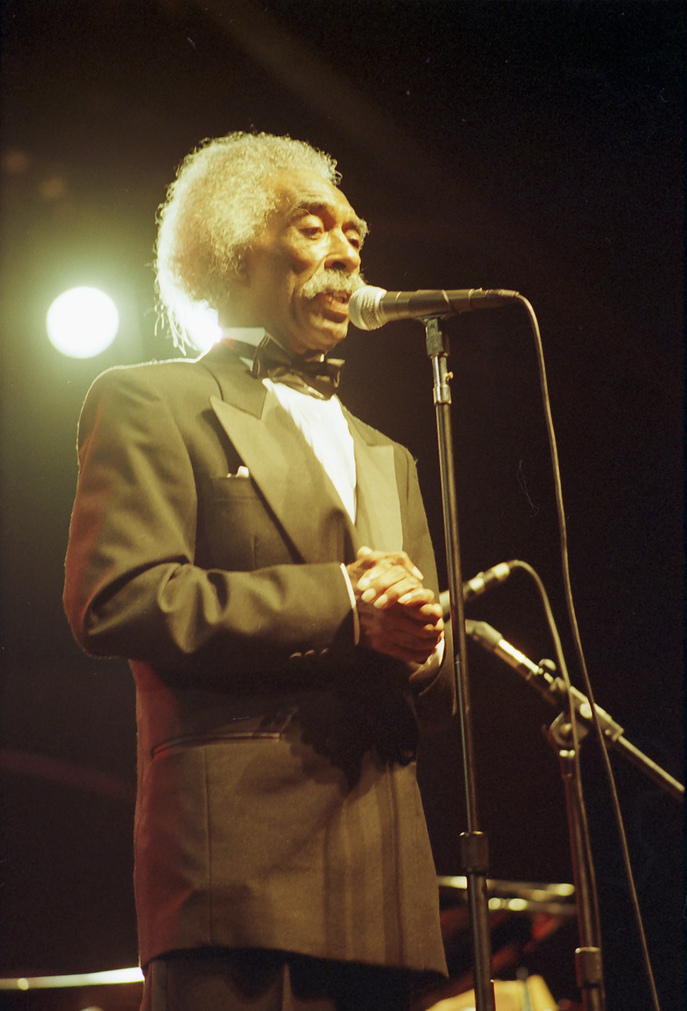
Gerald Stanley Wilson was born in Shelby, Mississippi, and grew up in Memphis. He played trumpet with Jimmie Lunceford’s orchestra (1939-1942), where he also arranged, before serving in the Navy. After WWII, Wilson formed his own big band in Los Angeles, becoming a West Coast jazz fixture for seven decades. He arranged for Duke Ellington, Ray Charles, Count Basie, and many others while leading his own orchestra intermittently until his death at age 96. Wilson also taught at California State University Northridge and UCLA. He received numerous honors for his contributions to jazz and education.
Musical Style
Wilson’s arranging style was characterized by dramatic power, sophisticated harmonies, and innovative rhythmic concepts. His arrangements often featured complex polyrhythms and unusual time signatures (including his pioneering use of 3/4 in jazz). Wilson had a gift for writing exciting, high-energy charts with powerful brass sections. His style incorporated elements from various sources—Spanish and Latin American music, the blues, modernist classical music—synthesized into a distinctive voice. Wilson’s arrangements featured strong melodies and clear formal structures. He was particularly skilled at building intensity through repetition and variation of motifs. His voicings were rich and dense, creating massive ensemble sounds. Wilson’s arrangements demanded technical excellence from musicians while remaining emotionally direct. His style evolved over decades while maintaining its essential character—bold, sophisticated, and swinging.
Orchestration Techniques
Wilson’s orchestration technique combines powerful brass writing with sophisticated rhythmic architecture, creating arrangements that synthesize Spanish and Latin influences with blues-based jazz foundations and modernist harmonic vocabulary. His characteristic voicing approach employs dense close-position brass voicings with trumpets operating in their brilliant upper register (written high D and above), creating massive, penetrating ensemble sonorities that became his signature sound. Wilson’s sectional writing features extended unison passages in the trumpet section, exploiting the accumulated power of multiple instruments playing identical lines in their optimal brilliance range, then suddenly opening into rich harmonized passages for dramatic contrast. His contrapuntal technique incorporates ostinato figures in lower brass and reeds while upper voices develop melodic material, creating layered textures where rhythmic and melodic elements operate with relative independence. The rhythmic architecture is particularly innovative, employing 3/4 and 6/8 meters uncommon in jazz contexts, with clave-based patterns and polyrhythmic layering derived from Latin American sources integrated into swing-based frameworks. Wilson’s use of instrumental registers exploits the trumpet section’s high tessitura for power, baritone saxophone and bass trombone for rhythmic punctuation in lower registers, and middle voices for harmonic filling. His dynamic scheme emphasizes dramatic contrast, with subito changes from fortissimo brass shouts to pianissimo rhythm section passages, creating theatrical effects that maintain listener engagement through surprise. Brass writing features strategic use of falls, doits, and shake ornaments notated precisely to create the stylistic authenticity of his blues-influenced approach. Wilson employs modal harmony alongside functional progressions, creating harmonic ambiguity that allows for extended improvisational frameworks while maintaining melodic clarity in ensemble passages. His reed section writing often doubles brass melodies at the unison during climactic passages, adding weight and reinforcing the powerful character of his orchestrations. Wilson’s signature technique involves motivic development through repetition and variation, building intensity by restating melodic cells with subtle alterations in orchestration and harmony while maintaining rhythmic drive, creating arrangements that achieve maximum emotional impact through cumulative power rather than harmonic complexity alone.
Top Albums
Gerald Wilson Orchestra - “You Better Believe It!” (1961)
This album showcases Wilson’s mature arranging style with original compositions including the title track. Wilson’s arrangement of “Viva Tirado” became his most famous piece, later covered by El Chicano as a hit. What makes these arrangements remarkable is their energy and sophistication—Wilson creates excitement through complex rhythmic patterns and powerful brass writing. His use of 3/4 time on several tracks was innovative for jazz at the time. The arrangements demonstrate Wilson’s gift for combining accessibility with musical substance. His writing for the trumpet section (which he knew intimately from his own playing) is particularly powerful.
Gerald Wilson Orchestra - “Moment of Truth” (1962)
Wilson’s arrangements here demonstrate his interest in Afro-Latin rhythms and Spanish music influences. “Carlos” and “Teri” showcase his gift for incorporating these elements while maintaining jazz authenticity. What’s particularly notable is Wilson’s harmonic sophistication—his voicings are rich and complex without sounding academic. The arrangements feature strategic use of dynamics and instrumental colors. Wilson’s ability to write memorable melodies combined with sophisticated arrangements made his work accessible to audiences while satisfying musicians. This album represents West Coast big band jazz at its finest.
Gerald Wilson Orchestra - “Theme for Monterey” (1997)
Recorded when Wilson was 79, this album proves his arranging powers remained intact. His arrangements incorporate modern jazz harmonies while maintaining his essential style. “Theme for Monterey” demonstrates Wilson’s continued evolution—the arrangement is more sophisticated than his 1960s work yet retains the same powerful, dramatic quality. What makes this album remarkable is hearing Wilson’s approach across five decades—his core values (strong melodies, powerful brass, sophisticated harmonies) remained constant while details evolved. The album showcases Wilson’s place as a living link between swing and contemporary jazz.