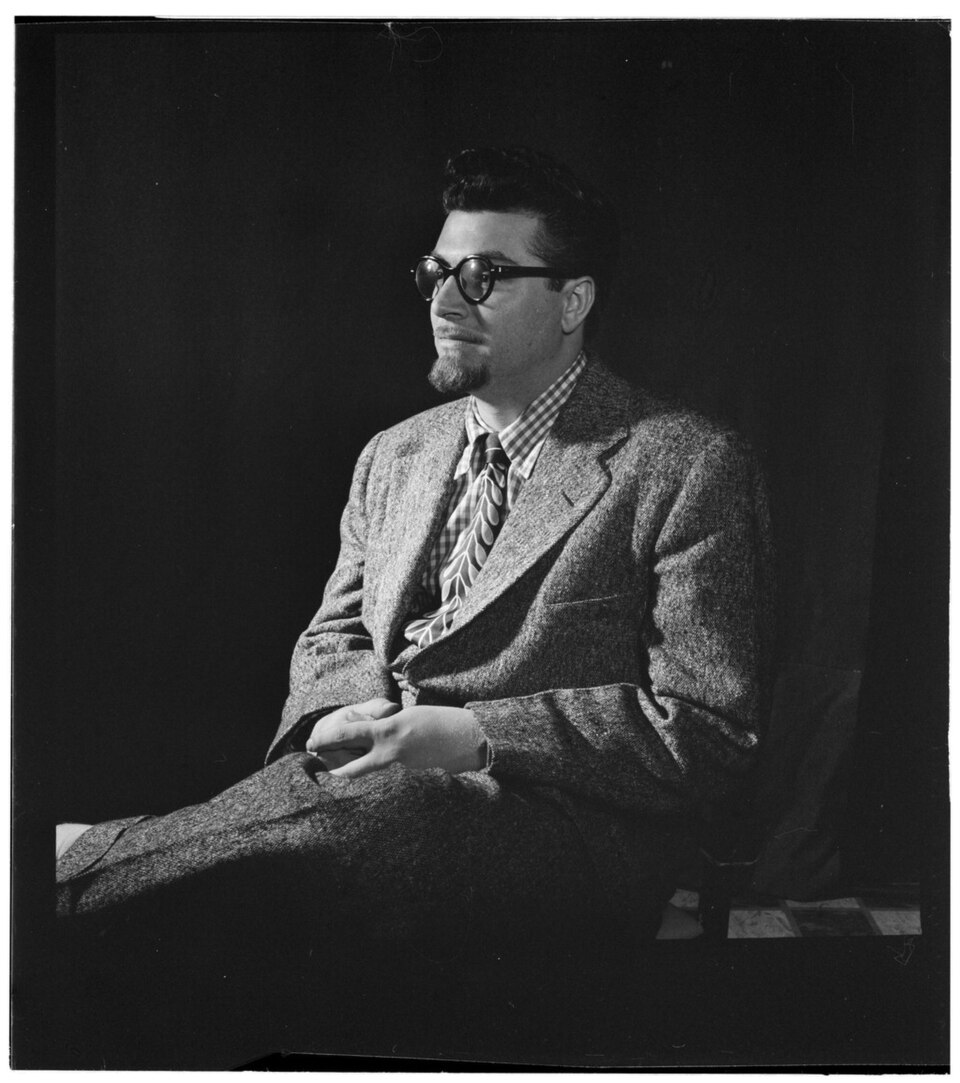
George Handy (1920-1997)

Biography

George Joseph Hendleman was born in New York City and studied at Juilliard. He played piano and arranged for Raymond Scott, Boyd Raeburn, and Dizzy Gillespie in the 1940s, creating some of the era’s most avant-garde jazz arrangements. Handy’s work was controversial—his extreme dissonances and adventurous harmonies were too radical for many listeners. After the big band era ended, he worked sporadically in music, dealing with personal difficulties. Handy’s influence was primarily on other arrangers who recognized his fearless experimentation. He lived in obscurity for decades before his contributions were rediscovered late in life.

Musical Style

Handy’s arranging style was the most radical of the 1940s, incorporating extreme dissonance, atonality, and modernist classical techniques that shocked even bebop musicians. His arrangements often abandoned traditional chord progressions entirely, creating soundscapes that anticipated free jazz by fifteen years. Handy used polytonality, tone clusters, and unconventional orchestration that sounded nothing like other jazz of the period. His arrangements were through-composed rather than based on repeated forms. Handy’s work was intellectually ambitious and uncompromising—he wasn’t interested in commercial success or accessibility. His voicings were often harsh and angular, creating tension rather than resolution. While too extreme for commercial success, Handy’s experiments expanded jazz arranging’s possibilities.

Orchestration Techniques

Handy’s orchestration technique represents the most avant-garde approach of the 1940s, employing atonal constructions, polytonality, and serial procedures that anticipate developments in jazz by decades. His characteristic voicing approach abandons tertian harmony entirely in favor of intervallic cells built on seconds, fourths, and tritones, creating dissonant sonorities where tension becomes the primary textural element rather than resolution. Handy’s sectional writing features extreme independence between brass and reed sections, with each operating in different tonal centers simultaneously to produce polytonal effects that challenge listeners’ harmonic expectations fundamentally. His contrapuntal technique employs twelve-tone row procedures and atonal melodic construction, with angular lines featuring wide intervallic leaps and avoidance of traditional melodic patterns that provide no conventional harmonic reference points. The rhythmic architecture incorporates polymetric layering where different sections operate in different meters simultaneously, creating rhythmic complexity that obscures regular pulse while maintaining forward motion through accumulated energy. Handy’s use of instrumental registers deliberately exploits extreme ranges for dissonance—low brass in their pedal register against high reeds in altissimo—creating timbral clashes that emphasize the harsh, uncompromising nature of his aesthetic. His dynamic scheme avoids traditional crescendo-diminuendo patterns in favor of terraced dynamics and sudden contrasts, with fortissimo passages abruptly cutting to silence without preparation. Brass voicings in Handy’s scores employ tone clusters built from minor seconds, creating dense chromatic masses that produce noise-like textures rather than pitched harmony. His woodwind writing features extended techniques including multiphonics, flutter-tongue, and quarter-tones that push instrumental capabilities beyond conventional jazz practice. Handy’s formal structures abandon song form entirely, employing through-composition with motivic development derived from classical modernism, where thematic material undergoes continuous transformation without repetition. His orchestration frequently pairs instruments in unusual combinations—bass clarinet with muted trumpet in extreme upper register, baritone saxophone with piccolo—creating timbral juxtapositions that emphasize the radical nature of his conception. Handy’s signature technique involves creating sustained dissonant textures that never resolve, maintaining harmonic tension throughout entire compositions and refusing the tension-release patterns fundamental to both classical and jazz practice, producing music that anticipated free jazz developments by fifteen years or more.

Top Albums

Boyd Raeburn Orchestra - “Boyd Meets Stravinsky” (1945-1947)

Handy’s arrangements for Raeburn represent his most successful recordings. “Dalvatore Sally” and “Boyd Meets Stravinsky” showcase his extreme harmonic language and unconventional orchestrations. What makes these arrangements remarkable is their uncompromising modernism—Handy wasn’t diluting his approach for commercial appeal. The arrangements sound more like 1960s avant-garde jazz than 1940s swing. “Boyd Meets Stravinsky” particularly demonstrates Handy’s incorporation of Stravinskian devices like rhythmic displacement and bitonal harmonies. These recordings were commercial failures but influenced adventurous arrangers for decades.

Dizzy Gillespie - “The Complete RCA Victor Recordings” (1947, Handy arrangements)

Handy arranged several pieces for Gillespie’s big band, including “Cool Breeze.” What’s fascinating is hearing Handy’s extreme approach in the bebop context—his arrangements made bebop sound conservative. His voicings challenged even Gillespie’s adventurous band. The arrangements demonstrate that Handy could work with bebop material while maintaining his radical voice. These recordings show the outer limits of what big band arranging could be in the 1940s.

George Handy - “Handyland” (1950s recordings, released later)

These rare recordings showcase Handy leading small groups through his compositions and arrangements. What makes these valuable is hearing Handy’s piano playing, which reveals the harmonic thinking behind his arrangements. The performances are raw and uncompromising, demonstrating Handy’s commitment to his vision despite commercial indifference. The arrangements anticipate Cecil Taylor and other free jazz pioneers by a decade. While rough in execution, these recordings document an important visionary whose influence exceeded his fame.