Jazz arranging · Swing & the Big Band Era
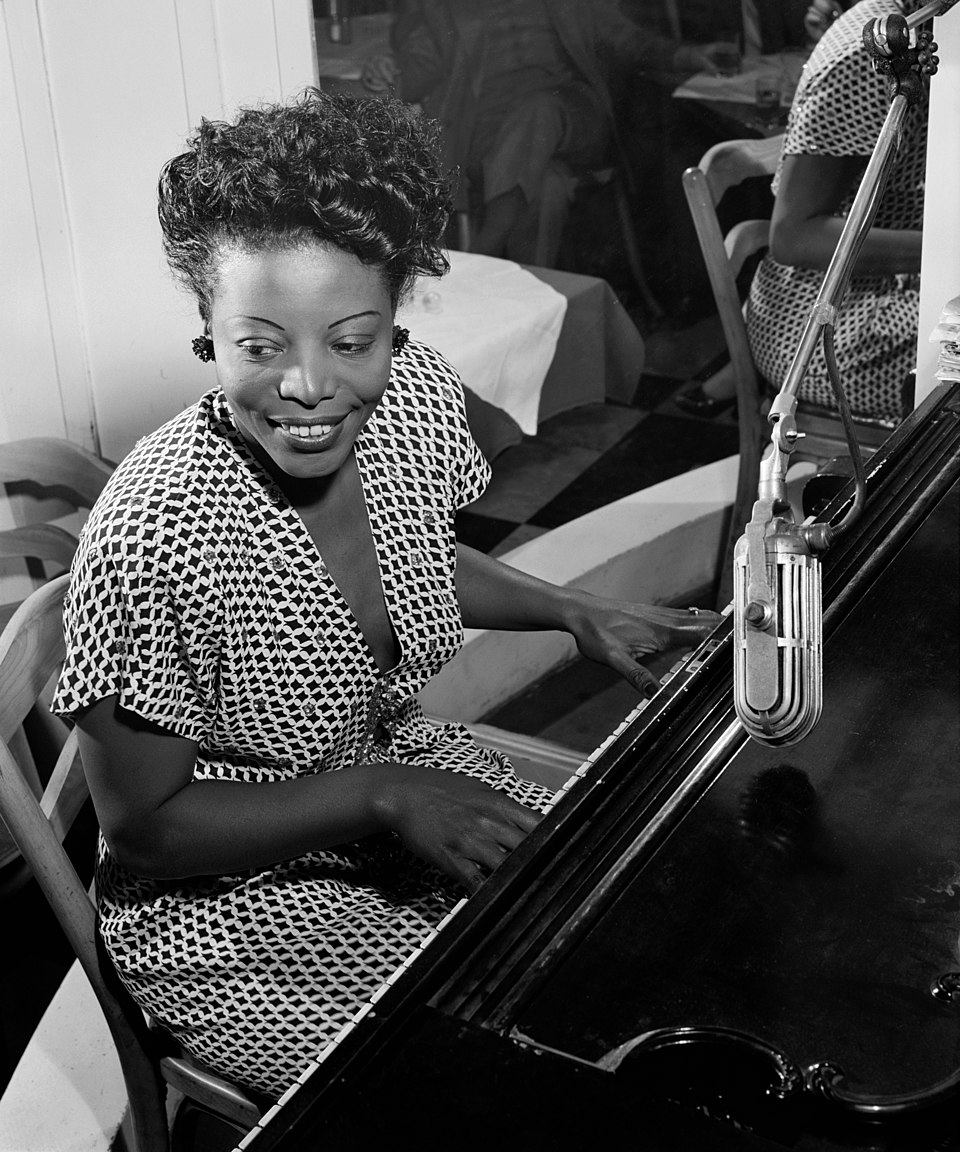
Mary LouWilliams
1910–1981 arranger · composer · orchestrator
Williams's arranging style reflected her Kansas City roots with blues-drenched melodies, riff-based structures, and a powerful…
_-_Crop.jpg)
- Predominant era
- Swing & the Big Band Era
- Lifespan
- 1910–1981
- Signature
- iridescent color
Bio · 19 words
Born Mary Elfrieda Scruggs in Atlanta, Georgia, Mary Lou Williams was a piano prodigy who performed publicly from childhood.
01
Musical style
Sound DNA
Five shared dimensions make the arranger’s musical priorities visible at a glance.
Iridescent
Instrumental color leads the design.
Compact
Ideas arrive in tightly packed frames.
Layered
Registers work as distinct layers.
Transparent
Individual lines stay easy to follow.
Elastic
The rhythmic feel expands and contracts.
02
Orchestration
Technique deck
Select a card to spotlight a device drawn from this arranger’s orchestral language.
03
Music first
Scores & orchestras
Switch recordings to compare how this arranger’s musical priorities shape each orchestral profile.
Walkin' and Swingin' · 1936-1942
Walkin' and Swingin',
This collection showcases Williams's arrangements that made Kirk's band one of the era's finest.
Listen forNotice how color shapes the orchestral profile.
Find listening example on YouTubeProfile derived from the arranger’s documented style and recording notes; exact instrumentation is not asserted.
The Zodiac Suite · 1945
third stream
Originally composed for Dizzy Gillespie's big band, this ambitious suite features twelve movements representing zodiac signs.
Listen forNotice how color shapes the orchestral profile.
Find listening example on YouTubeProfile derived from the arranger’s documented style and recording notes; exact instrumentation is not asserted.
Black Christ of the Andes · 1963
Black Christ of the Andes
This sacred work represents Williams's mature arranging style, incorporating her deep spiritual beliefs with sophisticated jazz orchestration.
Listen forNotice how color shapes the orchestral profile.
Find listening example on YouTubeProfile derived from the arranger’s documented style and recording notes; exact instrumentation is not asserted.
04
Start here
Three essential albums
One line each—enough context to choose the next listen.
- 01 1936-1942 Walkin' and Swingin'Andy Kirk and His Twelve Clouds of Joy This collection showcases Williams's arrangements that made Kirk's band one of the era's finest.
- 02 1945 The Zodiac SuiteMary Lou Williams Originally composed for Dizzy Gillespie's big band, this ambitious suite features twelve movements representing zodiac signs.
- 03 1963 Black Christ of the AndesMary Lou Williams This sacred work represents Williams's mature arranging style, incorporating her deep spiritual beliefs with sophisticated jazz orchestration.