Jazz arranging · Swing & the Big Band Era
SyOliver
1910–1988 arranger · composer · orchestrator
Oliver's arranging style was immediately recognizable for its infectious rhythmic drive and clever use of the…
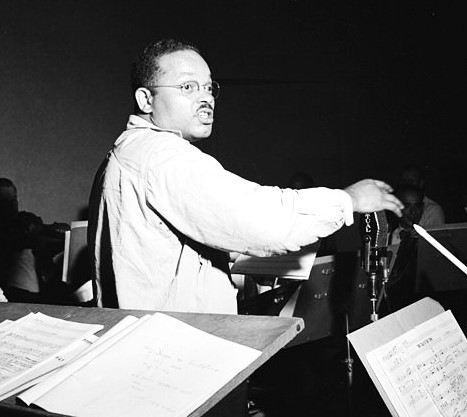
.jpg)
- Predominant era
- Swing & the Big Band Era
- Lifespan
- 1910–1988
- Signature
- iridescent color
Bio · 28 words
Melvin "Sy" Oliver was born in Battle Creek, Michigan, into a musical family. His father taught music, and young Sy learned trumpet and sang in his family's group.
01
Musical style
Sound DNA
Five shared dimensions make the arranger’s musical priorities visible at a glance.
Iridescent
Instrumental color leads the design.
Compact
Ideas arrive in tightly packed frames.
Layered
Registers work as distinct layers.
Transparent
Individual lines stay easy to follow.
Elastic
The rhythmic feel expands and contracts.
02
Orchestration
Technique deck
Select a card to spotlight a device drawn from this arranger’s orchestral language.
03
Music first
Scores & orchestras
Switch recordings to compare how this arranger’s musical priorities shape each orchestral profile.
For Dancers Only · 1934-1937
Organ Grinder's Swing,
This collection features Oliver's most influential arrangements for Lunceford, including the title track, "Organ Grinder's Swing," and "My Blue Heaven." What's remarkable…
Listen forNotice how color shapes the orchestral profile.
Find listening example on YouTubeProfile derived from the arranger’s documented style and recording notes; exact instrumentation is not asserted.
Yes Indeed! · 1939-1942
Well, Git It!
Oliver brought his Lunceford style to Dorsey's more commercial orchestra, creating hybrid arrangements that satisfied both jazz fans and the mainstream audience.
Listen forNotice how color shapes the orchestral profile.
Find listening example on YouTubeProfile derived from the arranger’s documented style and recording notes; exact instrumentation is not asserted.
Yes Indeed! · 1973
Opus One
Leading his own orchestra later in life, Oliver revisited his classic arrangements and created new ones in his signature style.
Listen forNotice how color shapes the orchestral profile.
Find listening example on YouTubeProfile derived from the arranger’s documented style and recording notes; exact instrumentation is not asserted.
04
Start here
Three essential albums
One line each—enough context to choose the next listen.
- 01 1934-1937 For Dancers OnlyJimmie Lunceford Orchestra This collection features Oliver's most influential arrangements for Lunceford, including the title track, "Organ Grinder's Swing," and "My Blue Heaven." What's remarkable…
- 02 1939-1942 Yes Indeed!Tommy Dorsey Orchestra Oliver brought his Lunceford style to Dorsey's more commercial orchestra, creating hybrid arrangements that satisfied both jazz fans and the mainstream audience.
- 03 1973 Yes Indeed!Sy Oliver Leading his own orchestra later in life, Oliver revisited his classic arrangements and created new ones in his signature style.