Satoko Fujii (b. 1958)
Biography
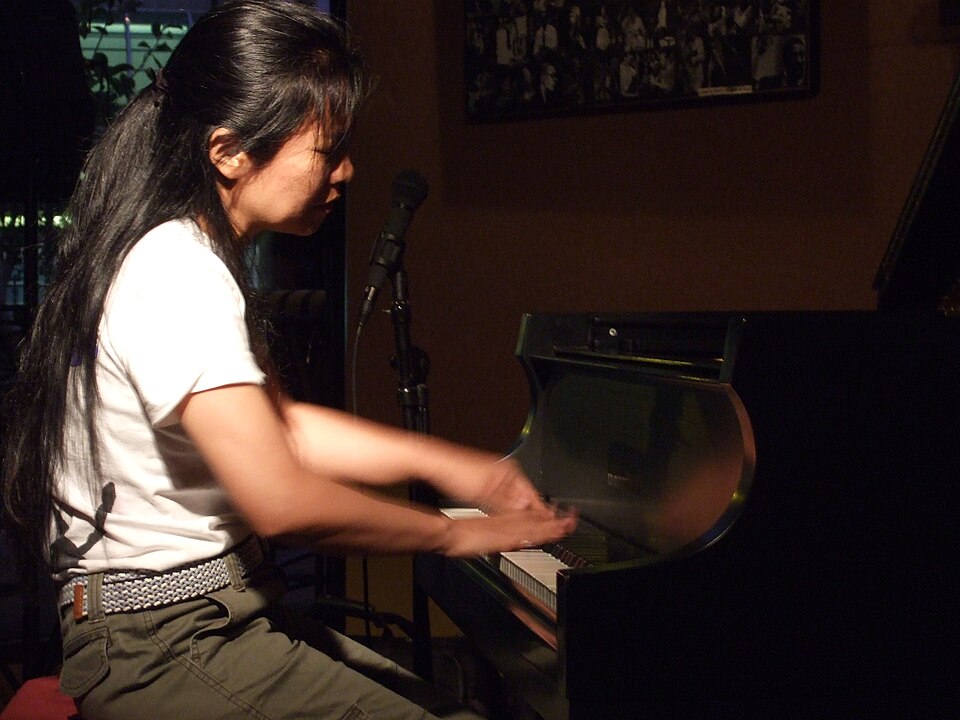
Satoko Fujii was born in Tokyo, Japan, and became a pianist, composer, and arranger exploring avant-garde approaches. She studied at Berklee and New England Conservatory before establishing herself internationally. Fujii leads multiple ensembles exploring free improvisation and composition. Her prolific output (releasing multiple albums annually) demonstrates remarkable creativity and willingness to take risks. Fujii’s arrangements feature free improvisation combined with compositional structures. Her work represents experimental edge of contemporary large ensemble jazz, demonstrating that arranging can support complete freedom while maintaining ensemble coherence. Fujii proves that avant-garde jazz thrives through dedicated practitioners willing to explore new territories uncompromisingly.
Musical Style
Fujii’s arranging style features free improvisation combined with compositional structures, creating frameworks supporting spontaneous collective creation. Her arrangements demonstrate understanding of how to organize freedom, providing enough structure for coherence while allowing maximum improvisation. What distinguishes Fujii’s work is its fearlessness—her charts explore extreme possibilities without compromise. Her voicings often incorporate extended techniques and unusual sonorities. Fujii’s approach represents experimental jazz: risk-taking, exploratory, and demonstrating that arranging serves diverse musical visions beyond conventional approaches.
Orchestration Techniques
Fujii employs unconventional voicing strategies that prioritize timbral exploration over traditional harmonic function, utilizing cluster chords constructed from seconds and sevenths creating maximum dissonance, and “noise voicings” where instruments produce non-pitched sounds (air through brass, key clicks, bow pressure sounds) organized into compositional structures. Her sectional writing abandons traditional big band hierarchy, treating each instrument as independent voice capable of contributing any sonic element—melodic, harmonic, rhythmic, or purely timbral—with sections frequently fragmenting into individual voices or temporarily coalescing into mass textures. Graphic notation passages allow performers to interpret visual symbols through personal sound choices, creating controlled aleatory where ensemble maintains compositional shape while individual contributions remain spontaneous. Instrumental combinations exploit extended techniques: brass instruments employing multiphonics and split tones, woodwinds utilizing overblowing and key slapping, strings incorporating prepared instrument techniques, and piano functioning as both melodic/harmonic instrument and percussion through inside-piano manipulation. Contrapuntal techniques include free counterpoint where multiple independent voices move without harmonic constraint, creating dense polyphonic textures through random simultaneity rather than planned voice leading, and “textural counterpoint” where contrasting timbral streams (rough versus smooth, pitched versus unpitched) create formal structure. Register exploitation extends into extreme territories: brass exploring pedal tones below normal playing range through lip manipulation, woodwinds accessing altissimo through overblowing, and percussion employing unusually low or high pitched instruments (bass drums, crotales) creating expanded frequency range. Rhythmic notation incorporates proportional notation where visual spacing indicates temporal relationships, box notation indicating durational flexibility, and cue-based entrances where performers respond to colleague’s actions rather than fixed meter, creating fluid temporal organization. Textural approaches range from sparse pointillistic passages where isolated sounds emerge from silence to overwhelming density where all instruments contribute simultaneously creating chaotic mass, with transitions between these extremes serving as primary formal architecture. Her preferred configuration is the large experimental ensemble (twelve to twenty players) with traditional jazz instrumentation expanded through inclusion of percussion specialists, electronics, and instruments capable of extended techniques, allowing maximum timbral variety. Dynamic architecture employs non-linear development where intensity fluctuates unpredictably, with sudden eruptions of fortissimo activity emerging from quiet passages and vice versa, creating formal unpredictability that mirrors free improvisation’s spontaneity. Signature techniques include her use of “conduction” sections where hand signals direct ensemble in real-time allowing for spontaneous orchestration decisions, and employment of “textural morphology” where ensemble gradually transforms from one sonic state to another (pitched to unpitched, ordered to chaotic, sparse to dense) through collectively negotiated transitions, creating organic formal evolution.
Top Albums
Satoko Fujii Orchestra Tokyo - various albums
Fujii’s arrangements for her Tokyo orchestra showcase her distinctive approach to large ensemble free improvisation. Her charts create frameworks allowing collective spontaneous creation while maintaining ensemble coherence. What makes these arrangements remarkable is their success at organizing freedom—Fujii creates structures supporting rather than constraining improvisation.
International Ensembles
Fujii’s work leading multiple ensembles internationally (Tokyo, New York, Berlin orchestras) demonstrates her prolific creativity. Her arrangements adapt to different personnel while maintaining her distinctive aesthetic. What’s particularly impressive is Fujii’s sustained productivity and consistent quality across numerous projects annually.
Avant-Garde Leadership
Fujii’s role as leading avant-garde figure demonstrates experimental jazz’s continued vitality. Her uncompromising work shows that jazz supports complete freedom through skilled practitioners willing to explore challenging territories. This represents jazz’s experimental edge remaining vital through dedicated artists.