Jazz arranging · Contemporary & Hybrid Jazz
ArturoO'Farrill
b. 1960 arranger · composer · orchestrator
O'Farrill's arranging style continues Afro-Cuban big band tradition established by his father and others while developing…
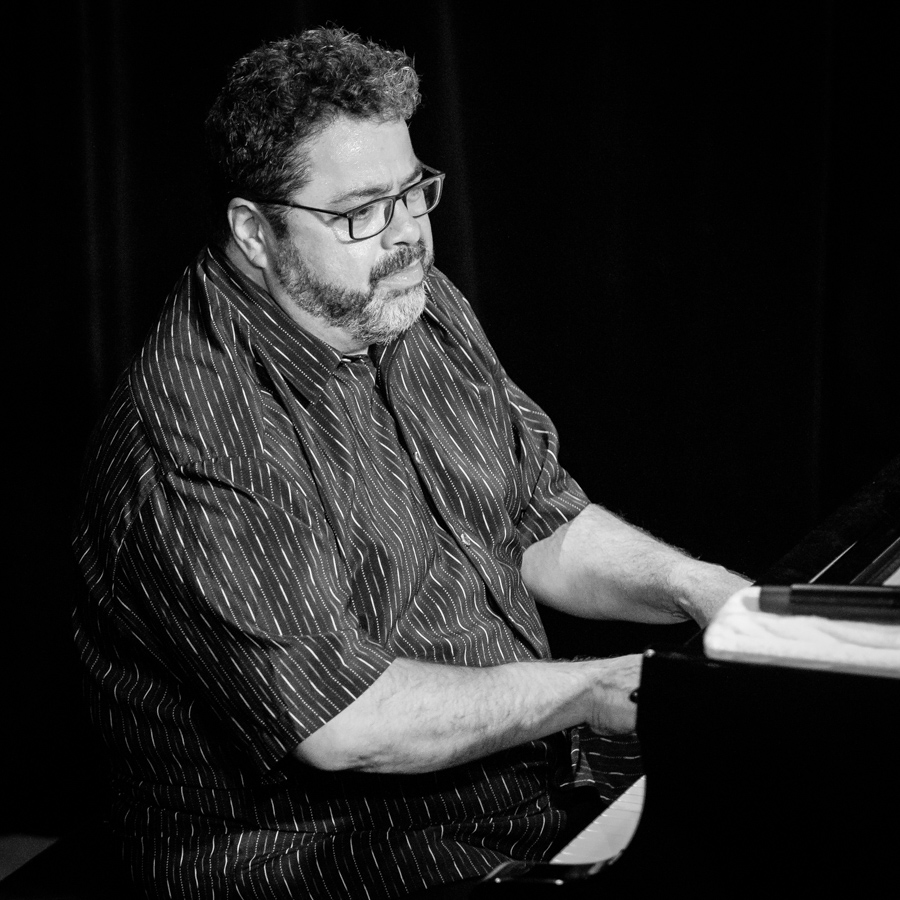
.jpg)
- Predominant era
- Contemporary & Hybrid Jazz
- Lifespan
- b. 1960
- Signature
- expansive register
Bio · 39 words
Arturo O'Farrill, son of legendary arranger Chico O'Farrill, was born in Mexico and leads the Afro Latin Jazz Orchestra. He studied piano at Brooklyn College Conservatory and Manhattan School of Music before establishing himself as pianist, composer, and arranger.
01
Musical style
Sound DNA
Five shared dimensions make the arranger’s musical priorities visible at a glance.
Varied
Contrasting families shape the sound.
Compact
Ideas arrive in tightly packed frames.
Expansive
Wide spans define the orchestral frame.
Layered
Several musical planes coexist.
Elastic
The rhythmic feel expands and contracts.
02
Orchestration
Technique deck
Select a card to spotlight a device drawn from this arranger’s orchestral language.
03
Music first
Scores & orchestras
Switch recordings to compare how this arranger’s musical priorities shape each orchestral profile.
Una Noche Inolvidable · 2005
Afro-Cuban Jazz Suite
O'Farrill's arrangements for his orchestra showcase his distinctive voice.
Listen forNotice how register shapes the orchestral profile.
Find listening example on YouTubeProfile derived from the arranger’s documented style and recording notes; exact instrumentation is not asserted.
The Conversation Continues · 2011
The Conversation Continues
O'Farrill's arrangements addressing Cuba-U.S. relations demonstrate how jazz can engage political issues through musical means.
Listen forNotice how register shapes the orchestral profile.
Find listening example on YouTubeProfile derived from the arranger’s documented style and recording notes; exact instrumentation is not asserted.
Legacy and Education
Legacy and Education
O'Farrill's work through the Afro Latin Jazz Alliance ensures tradition's continuation through education.
Listen forNotice how register shapes the orchestral profile.
Find listening example on YouTubeProfile derived from the arranger’s documented style and recording notes; exact instrumentation is not asserted.
04
Start here
Three essential albums
One line each—enough context to choose the next listen.
- 01 2005 Una Noche InolvidableAfro Latin Jazz Orchestra O'Farrill's arrangements for his orchestra showcase his distinctive voice.
- 02 2011 The Conversation ContinuesAfro Latin Jazz Orchestra O'Farrill's arrangements addressing Cuba-U.S. relations demonstrate how jazz can engage political issues through musical means.
- 03 — Legacy and EducationArturo O'Farrill O'Farrill's work through the Afro Latin Jazz Alliance ensures tradition's continuation through education.