Jazz arranging · Contemporary & Hybrid Jazz
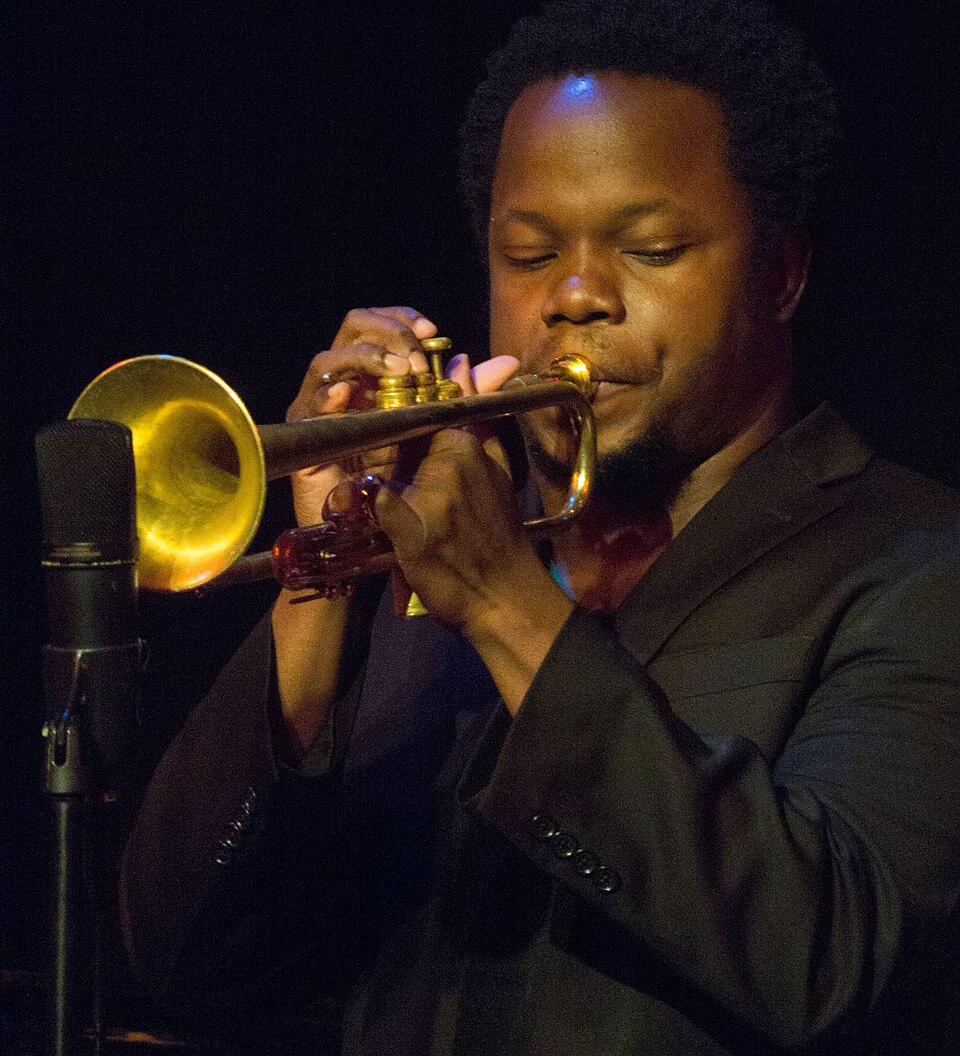
AmbroseAkinmusire
b. 1982 arranger · composer · orchestrator
Akinmusire's arranging style incorporates contemporary classical, hip-hop, and jazz through sophisticated compositional approaches featuring through-composed structures…

- Predominant era
- Contemporary & Hybrid Jazz
- Lifespan
- b. 1982
- Signature
- balanced space
Bio · 39 words
Ambrose Akinmusire was born in Oakland, California, and became a trumpeter and composer creating arrangements incorporating contemporary classical, hip-hop, and jazz. He studied at Manhattan School of Music before establishing himself as one of contemporary jazz's most distinctive voices.
01
Musical style
Sound DNA
Five shared dimensions make the arranger’s musical priorities visible at a glance.
Varied
Contrasting families shape the sound.
Balanced
Space and activity stay in balance.
Layered
Registers work as distinct layers.
Layered
Several musical planes coexist.
Suspended
Motion unfolds with patience.
02
Orchestration
Technique deck
Select a card to spotlight a device drawn from this arranger’s orchestral language.
03
Music first
Scores & orchestras
Switch recordings to compare how this arranger’s musical priorities shape each orchestral profile.
When the Heart Emerges Glistening · 2011
When the Heart Emerges Glistening
Akinmusire's Blue Note debut features his arrangements balancing composition and improvisation.
Listen forNotice how density shapes the orchestral profile.
Find listening example on YouTubeProfile derived from the arranger’s documented style and recording notes; exact instrumentation is not asserted.
The Imagined Savior is Far Easier to Paint · 2014
The Imagined Savior is Far Easier to Paint
Akinmusire's arrangements addressing violence and social issues demonstrate jazz's capacity for serious engagement with contemporary realities.
Listen forNotice how register shapes the orchestral profile.
Find listening example on YouTubeProfile derived from the arranger’s documented style and recording notes; exact instrumentation is not asserted.
Contemporary Significance
Contemporary Significance
Akinmusire's work represents jazz engaging with current social realities, demonstrating the music's continued relevance.
Listen forNotice how density shapes the orchestral profile.
Find listening example on YouTubeProfile derived from the arranger’s documented style and recording notes; exact instrumentation is not asserted.
04
Start here
Three essential albums
One line each—enough context to choose the next listen.
- 01 2011 When the Heart Emerges GlisteningAmbrose Akinmusire Akinmusire's Blue Note debut features his arrangements balancing composition and improvisation.
- 02 2014 The Imagined Savior is Far Easier to PaintAmbrose Akinmusire Akinmusire's arrangements addressing violence and social issues demonstrate jazz's capacity for serious engagement with contemporary realities.
- 03 — Contemporary SignificanceAmbrose Akinmusire Akinmusire's work represents jazz engaging with current social realities, demonstrating the music's continued relevance.