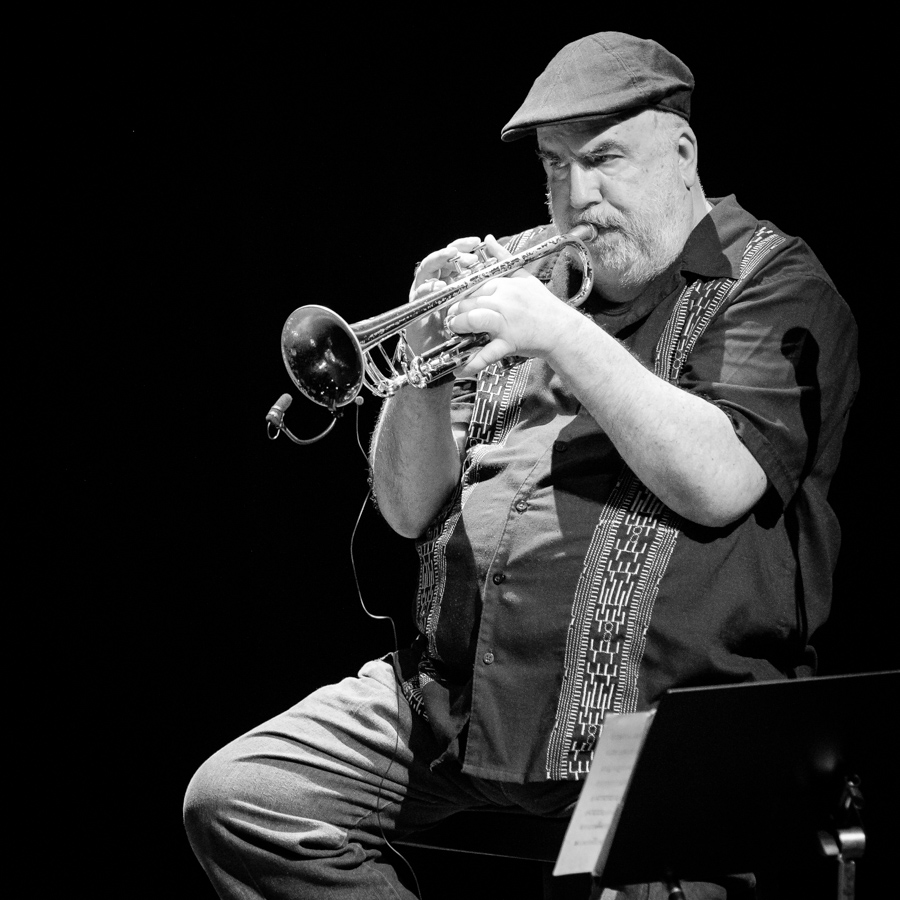
Randy Brecker (b. 1945)
Biography
Randy Brecker was born in Philadelphia and became one of jazz’s most versatile trumpeters and composers. He co-led the Brecker Brothers with his late brother, saxophonist Michael Brecker, creating influential fusion music in the 1970s-80s. Randy has worked across multiple styles from hard bop to fusion to contemporary jazz, playing with Art Blakey, Horace Silver, Dreams, and countless others. He’s led his own groups and recorded prolifically as leader and sideman. Brecker has won multiple Grammy Awards. His arrangements combine jazz sophistication with funk grooves, demonstrating that fusion could maintain artistic credibility while achieving commercial success. The Brecker Brothers’ work influenced generations of musicians, showing how to balance technical excellence, strong grooves, and memorable melodies. Randy’s career demonstrates sustained creativity and adaptability across changing jazz styles.
Musical Style
Brecker’s arranging style combines jazz-funk grooves with sophisticated harmonies, featuring strong melodies, tight horn writing, and contemporary production. His arrangements demonstrate understanding of how to make complex music accessible and danceable. What distinguishes Brecker’s work is its balance between sophistication and groove—his charts feature challenging harmonies and rhythms yet maintain strong forward motion and accessibility. His horn writing is excellent, drawing on his experience as brass player to create effective voicings. Brecker’s harmonic language combines bebop sophistication with funk and R&B influences. His arrangements feature memorable melodies—Brecker understands that sophisticated arranging should serve strong compositional material. His style represents jazz-fusion at its best: technically excellent, groovy, and musically substantial.
Orchestration Techniques
Brecker’s horn section voicings draw from R&B and funk traditions, employing tight close-position voicings with trumpet and saxophone in parallel thirds or fourths, creating punchy, projecting lines that cut through rhythm section density. His brass writing exploits his own fluency on trumpet, featuring virtuosic unison lines between trumpet and tenor saxophone at octave or in rhythmic unison with harmonized passages at phrase endings for emphasis. Sectional approaches emphasize rhythmic precision, with horn sections functioning as unified rhythmic force, attacking syncopated figures with mechanical tightness characteristic of Tower of Power and similar funk horn sections. Instrumental combinations feature trumpet-saxophone pairings as primary melodic vehicle, often doubled by synthesizer for additional weight and sustain, a technique central to Brecker Brothers’ signature sound. Contrapuntal techniques are minimal in traditional sense, instead employing layered ostinato patterns where each instrument maintains independent rhythmic cell that interlocks with others to create complex polyrhythmic groove. Register exploitation places brass in their most brilliant upper ranges for lead lines, while electric bass operates in low register with active, syncopated patterns that provide harmonic and rhythmic foundation simultaneously. Rhythmic notation is extremely precise, with specific articulations for staccato sixteenth-note patterns, ghost notes, and accented backbeats that define the funk groove, requiring performers to execute with drum-like precision. Textural approaches favor dense, layered arrangements where keyboards, bass, drums, and horns each occupy distinct sonic space within the mix, a technique influenced by studio production practices. His ensemble configurations typically include electric bass, keyboards (often multiple synthesizers), drums, percussion, and small horn section, prioritizing groove-based instrumentation. Dynamic architecture follows pop-influenced verse-chorus structures with clear dynamic contrasts between sections, using horn hits and sustained pads to demarcate formal boundaries within groove-based compositions.
Top Albums
The Brecker Brothers - “Heavy Metal Be-Bop” (1978)
Brecker’s arrangements for the Brecker Brothers showcase peak jazz-funk fusion. His charts feature tight horn arrangements, sophisticated harmonies, and infectious grooves. What makes these arrangements influential is their success at combining complexity and accessibility—Brecker writes challenging music that nonetheless grooves hard and communicates directly. His composition “Inside Out” demonstrates his gift for creating memorable melodies with sophisticated harmonic and rhythmic frameworks. The album represents fusion at its creative and commercial peak.
Randy Brecker - “Some Skunk Funk” (2006)
Brecker’s arrangements of Brecker Brothers material for WDR Big Band (with arrangements primarily by Michael Abene) demonstrate how fusion classics translate to large ensemble. While Abene arranged most charts, Brecker’s compositional voice drives the project. What’s particularly impressive is how this music maintains its essential character in big band setting—the grooves remain strong despite orchestral expansion. The album won Grammy and represents successful fusion-to-big-band translation.
Randy Brecker - “The Brecker Brothers Band Reunion” (2013)
Brecker’s arrangements for the reunited band (following Michael’s death) demonstrate his continued commitment to the fusion aesthetic. His charts maintain the Brothers’ signature combination of sophisticated harmonies and strong grooves while incorporating contemporary elements. What makes these arrangements notable is their balance between nostalgia and freshness—Brecker honors the past while moving forward. His composition “Adina” showcases his continued melodic gifts and his understanding of how to create contemporary fusion that swings. The album won Grammy and demonstrates Randy’s sustained excellence.