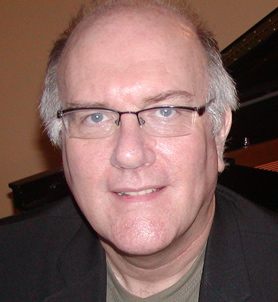
Jim McNeely (b. 1949)

Biography

James Harry McNeely was born in Chicago and studied at University of Illinois and later at Miami. He’s a pianist, composer, and arranger who has worked with Stan Getz, the Thad Jones/Mel Lewis Orchestra (later Vanguard Jazz Orchestra), and many others. McNeely served as pianist and chief arranger for the Vanguard Jazz Orchestra for decades, contributing numerous acclaimed charts. He’s also led his own groups and recorded extensively as leader. McNeely has taught at various institutions and his compositions and arrangements are performed worldwide. He won Grammy Awards and received widespread critical acclaim. McNeely’s work with the Vanguard Orchestra represents some of contemporary big band jazz’s finest arranging, demonstrating that the tradition remains vital and capable of fresh expression. His success shows that serious, uncompromising music can find audiences when executed at the highest levels.

Musical Style

McNeely’s arranging style features sophisticated harmonies, interesting textures, and strong compositional development rooted in the Thad Jones tradition while extending it in personal directions. His arrangements demonstrate complete mastery of big band writing, with excellent voice leading and careful attention to orchestral color. What distinguishes McNeely’s work is its combination of intellectual rigor and emotional depth—his music is both harmonically sophisticated and deeply moving. His voicings are complex yet transparent, featuring subtle inner voice movement and unexpected harmonic turns. McNeely writes beautifully for all sections, understanding each instrument’s character and capabilities. His harmonic language draws from bebop, contemporary classical music, and personal synthesis. McNeely’s arrangements balance written complexity with improvisational freedom, creating frameworks that challenge soloists while supporting them. His style represents the contemporary evolution of the Jones-Lewis big band tradition.

Orchestration Techniques

McNeely’s orchestrations demonstrate advanced voice-leading techniques with extensive chromatic planing and parallel chord movements that create modernist sonorities while maintaining jazz tradition. His voicing approach employs hybrid structures combining tertian and quartal elements, often stacking a perfect fourth atop a major seventh chord to create bright, open colors. Sectional writing utilizes sophisticated divisi techniques where sections split into independent voices, creating six or seven-part textures within a single choir that interact polyphonically. Contrapuntal techniques include elaborate canonic passages where themes appear in augmentation or diminution across different sections, with brass and saxophones maintaining independent melodic interest while creating harmonic convergence points. McNeely’s register usage exploits extreme ranges strategically, reserving high trumpet writing for climactic moments while generally keeping sections in their most resonant tessituras. His saxophone voicings demonstrate particular sophistication, often employing five independent lines with the baritone as a true bass voice rather than a doubling instrument. Rhythmic notation includes complex asymmetric meters, metric modulations, and polyrhythmic figures where different sections maintain conflicting pulse streams. Textural approaches range from single-line unisons to dense twelve-part voicings, with careful attention to orchestral weight and formal pacing through textural density. McNeely’s preferred configuration is the Thad Jones-style big band with expanded woodwind doubles, allowing for timbral variety through flute choirs and clarinet voicings. Dynamic architecture employs sophisticated terracing with sudden piano subito effects followed by gradual crescendos, creating dramatic narrative arcs within compositions. His signature technique involves voice-leading chords through chromatic sequences where each voice moves by half-step independently, creating constantly shifting harmonic colors that maintain motion even during sustained passages, a technique drawing from contemporary classical practice applied to jazz contexts.

Top Albums

Vanguard Jazz Orchestra - “Up from the Skies” (2006, McNeely arrangements)

McNeely’s arrangements for the Vanguard Orchestra showcase his mature style. His charts feature sophisticated harmonies, inventive orchestration, and strong thematic development. What makes these arrangements remarkable is their combination of complexity and swing—McNeely writes challenging music that nonetheless grooves hard and maintains forward motion. His composition “Across the Crystal Sea” demonstrates his gift for extended forms that sustain interest through harmonic and orchestral development. The voicings prove McNeely’s complete mastery of big band resources.

Jim McNeely - “East Coast Blow Out” (1985)

McNeely’s own arrangements for sextet demonstrate his gifts beyond big band context. His charts feature sophisticated harmonies within smaller instrumentation, proving his adaptability and his understanding of how different ensemble sizes require different approaches. What’s particularly impressive is McNeely’s writing for improvisation—his structures enhance soloists while providing compositional substance. His composition “East Coast Blow Out” showcases his ability to create exciting, swinging music with intellectual depth. The album demonstrates McNeely’s range as arranger-composer.

Vanguard Jazz Orchestra - “Forever Lasting” (2015, McNeely arrangements)

McNeely’s later arrangements show continued evolution into his 60s. His charts maintain sophisticated voicings while achieving even greater clarity and emotional directness. What makes these arrangements fascinating is their perfect balance—McNeely achieves maximum harmonic interest while maintaining accessibility and swing. His arrangement of “Old Churchyard” demonstrates how traditional material can be completely transformed through sophisticated reharmonization and orchestration. The album won Grammy and represents McNeely at peak creative powers.