Toshiko Akiyoshi (b. 1929)
Biography
Toshiko Akiyoshi was born in Manchuria (China) to Japanese parents and grew up in Japan. She became one of Japan’s first prominent jazz musicians before moving to the U.S. in 1956 to study at Berklee. Akiyoshi played with various groups before forming the Toshiko Akiyoshi-Lew Tabackin Big Band in Los Angeles (1973), later based in New York. Her orchestra earned 14 Grammy nominations, and she received NEA Jazz Master honor. Akiyoshi pioneered incorporating Japanese musical elements into jazz arranging. Now in her 90s, she remains a towering figure in jazz.
Musical Style
Akiyoshi’s arranging style uniquely fuses Japanese traditional music with jazz. Her arrangements incorporate Japanese scales, instruments (shakuhachi, koto), and aesthetics while maintaining authentic jazz feeling. Akiyoshi’s orchestrations are colorful and imaginative, featuring unusual timbres and instrumental combinations. Her arrangements demonstrate sophisticated big band craft learned from Duke Ellington and others, combined with Japanese sensibilities regarding space, texture, and form. Akiyoshi’s style balances Eastern and Western elements without either dominating. Her arrangements are technically demanding yet emotionally direct. Akiyoshi’s work proved that jazz could incorporate non-Western elements authentically, influencing world jazz movement significantly.
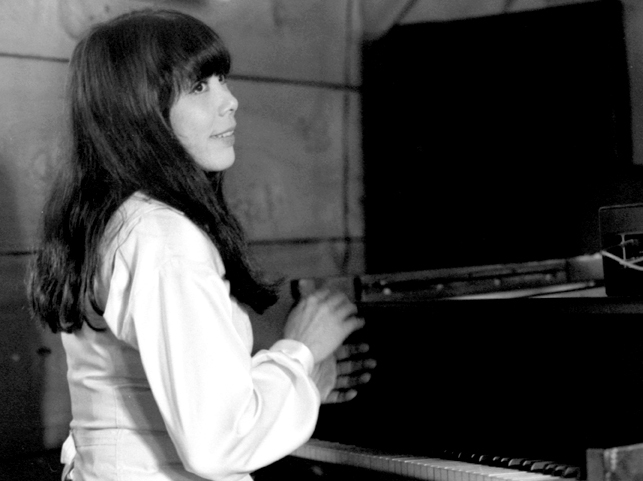
Orchestration Techniques
Akiyoshi’s orchestration techniques synthesize Ellingtonian big band craft with Japanese traditional music principles, creating a distinctive hybrid approach that respects both traditions’ integrity. Her voicings often employ pentatonic structures derived from Japanese scales—particularly the in and yo scales—harmonized in fourths and fifths rather than thirds, creating modal sonorities that evoke both jazz and gagaku court music. The integration of shakuhachi bamboo flute into big band contexts demonstrates sophisticated understanding of timbral blending: Akiyoshi voices the shakuhachi an octave above the flute section during unison passages, allowing its breathy overtones to color the ensemble sound. Her saxophone section writing frequently utilizes all five voices in parallel pentatonic motion, creating textures reminiscent of sho mouth organ clusters while maintaining jazz section blend. Akiyoshi employs space and silence as structural elements, incorporating ma—the Japanese concept of negative space—through strategic rests and sustained tones that allow resonance to decay naturally, a technique foreign to Western big band tradition. Her contrapuntal approach often involves ostinato patterns in the rhythm section derived from Japanese festival drumming, particularly the complex interlocking patterns of taiko ensembles, over which horn sections voice jazz harmonies. The brass writing in Akiyoshi’s charts exploits muted colors extensively, with harmon and cup mutes creating subdued timbres that blend more readily with traditional Japanese instruments. Her use of koto, when employed, is scored to cut through the ensemble during strategic moments, its crystalline attack providing contrast against sustained horn voicings. Rhythmic notation in her scores incorporates flexible time, with sections marked for rubato interpretation that allows musicians to breathe naturally rather than adhering to strict metric pulse, reflecting Japanese aesthetics of organic temporal flow. Akiyoshi’s dynamic architecture typically builds from transparent textures featuring single instruments—often Tabackin’s tenor or flute—to massive tutti climaxes, mirroring the arc of traditional Japanese storytelling. Her treatment of the lower brass exploits bass trombone and baritone saxophone for sustained pedal tones that anchor complex upper-voice movement, a technique borrowed from Ellington but applied to pentatonic rather than blues-based harmony. Instrumental combinations in her arrangements pair Western and Eastern instruments in dialogue rather than mere simultaneity, creating call-and-response between cultural voices. A signature technique involves scoring passage transitions using the Ellingtonian technique of staggered brass entrances, but applying it to pentatonic melodic material that ascends or descends through the Japanese scale system, creating a distinctly bi-cultural sound that has influenced world jazz orchestration globally.
Top Albums
Toshiko Akiyoshi-Lew Tabackin Big Band - “Long Yellow Road” (1974)
Akiyoshi’s arrangements incorporating Japanese elements showcase her unique voice. The title track features shakuhachi flute integrated with big band, creating unprecedented timbral combinations. What makes these arrangements remarkable is their authenticity—Akiyoshi isn’t applying Japanese decorations but genuinely fusing two traditions. The arrangements demonstrate sophisticated big band craft combined with Japanese aesthetics. This work established Akiyoshi as major arranger.
Toshiko Akiyoshi Jazz Orchestra - “Desert Lady / Fantasy” (1994)
Akiyoshi’s later arrangements demonstrate her mature style. The charts feature sophisticated voicings, dramatic pacing, and continued Japanese influences. What’s particularly notable is how Akiyoshi’s arrangements create narrative arcs—each piece tells a story through purely musical means. The orchestrations are detailed and colorful, showcasing her command of big band resources. The album demonstrates Akiyoshi’s continued evolution and undiminished powers.
Toshiko Akiyoshi Jazz Orchestra - “Hiroshima: Rising from the Abyss” (2001)
Akiyoshi’s extended work addressing Hiroshima’s bombing represents her most ambitious and personal arranging. The suite combines big band, Japanese instruments, and narrative power. What makes this arrangement remarkable is its emotional directness despite musical sophistication. Akiyoshi creates powerful statements about history and humanity through instrumental music. The arrangement demonstrates that jazz can address serious subjects with appropriate gravity.