Lalo Schifrin (b. 1932)
Biography
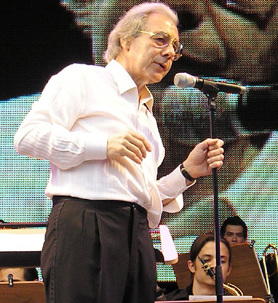
Boris Claudio “Lalo” Schifrin was born in Buenos Aires, Argentina, and studied classical piano and composition. He moved to New York in 1958 and joined Dizzy Gillespie’s band as pianist and arranger, absorbing bebop and Afro-Cuban jazz. Schifrin moved to Hollywood in 1963 and became one of film and television’s most successful composers, creating themes for “Mission: Impossible,” “Mannix,” “Cool Hand Luke,” and over 100 films. He continued balancing film work with jazz compositions and recordings. Schifrin received multiple Grammy and Oscar nominations, winning several awards. Now in his 90s, he remains active.
Musical Style
Schifrin’s arranging style fuses Latin American rhythms, bebop harmonies, and orchestral sophistication. His arrangements feature exciting rhythmic energy, sophisticated voicings, and dramatic flair. Schifrin had a gift for creating memorable themes and developing them orchestrally. His style incorporated Argentine tango, Brazilian samba, and Afro-Cuban rhythms into jazz contexts. Schifrin’s film work influenced his jazz arranging—he understood dramatic pacing and emotional manipulation through orchestration. His arrangements are always energetic and engaging, never academic despite sophistication. Schifrin’s command of both jazz and orchestral idioms allowed him to move seamlessly between contexts. His arrangements demonstrate that Latin jazz could be sophisticated and commercially successful.
Orchestration Techniques
Schifrin’s orchestration techniques draw heavily from both classical symphonic tradition and Afro-Cuban percussion practices, creating a distinctive hybrid approach. His brass voicings frequently employ quartal and quintal harmony, stacking perfect fourths and fifths to create open, powerful sonorities that complement Latin rhythmic intensity. The saxophone section in Schifrin’s scores often functions as a woodwind choir rather than a jazz section, with extensive use of clarinet and flute doublings to achieve orchestral colors. His writing for percussion is extraordinarily detailed, with specific notation for timbales, congas, bongos, and various auxiliary percussion creating interlocking polyrhythmic patterns derived from Afro-Cuban clave structures. Schifrin employs hocket technique between brass and saxophone sections, where rhythmic figures are distributed across multiple voices to create composite lines of great complexity. His contrapuntal approach frequently uses augmentation and diminution of thematic material, treating jazz themes with classical developmental techniques including stretto and fugal exposition. Sectional writing in his charts features both concerted passages where all instruments articulate rhythmic figures together and antiphonal exchanges between brass and reeds that exploit the spatial dimension of the orchestra. Schifrin’s string writing, when employed, uses divisi voicings with tremolo and sul ponticello techniques to create tension, contrasted against jazz ensemble passages. His dynamic architecture is notably cinematic, with sudden sforzando accents, extended crescendos, and dramatic pauses that create narrative arc within instrumental pieces. Rhythmic notation includes extensive use of odd meters—particularly 5/4 and 7/8—integrated seamlessly with traditional Latin patterns, and his metric modulations are precisely calculated to maintain groove while shifting temporal feel. A signature orchestration technique involves tutti unison lines in octaves across the full ensemble, creating powerful melodic statements that became characteristic of his television and film themes. Schifrin’s use of the lower brass register—particularly bass trombone and tuba—provides harmonic foundation while simultaneously participating in rhythmic figures, a technique borrowed from tango orchestration.
Top Albums
Lalo Schifrin - “Gillespiana” (1960)
Schifrin’s extended suite for Gillespie and orchestra represents his breakthrough. The five-movement work fuses Latin rhythms, jazz improvisation, and orchestral development. What makes this arrangement remarkable is its ambition and success—Schifrin sustains interest across an extended form while maintaining jazz spontaneity. The orchestration is colorful and dramatic, showcasing Schifrin’s command of orchestral resources. The work influenced Afro-Cuban jazz and demonstrated Schifrin’s potential.
Lalo Schifrin - “Jazz Meets the Symphony” (1993)
Schifrin’s arrangements for jazz ensemble and symphony orchestra demonstrate his mature fusion approach. The charts seamlessly integrate jazz and classical forces, creating genuine dialogue rather than mere alternation. What’s particularly impressive is how Schifrin maintains jazz feeling with symphony orchestra—the arrangements swing despite classical instrumentation. The work represents peak fusion of jazz and orchestral music, drawing on Schifrin’s decades of experience in both worlds.
Lalo Schifrin - “Black Widow” (1976)
Schifrin’s film score demonstrates how his jazz arranging influenced his film work. The arrangements feature jazz instrumentation and improvisation within dramatic contexts. What makes this fascinating is hearing Schifrin’s jazz voice applied to narrative purposes—the arrangements serve dramatic needs while maintaining jazz authenticity. The score shows how jazz arranging techniques could enhance film music.