Herbie Hancock (b. 1940)
Biography
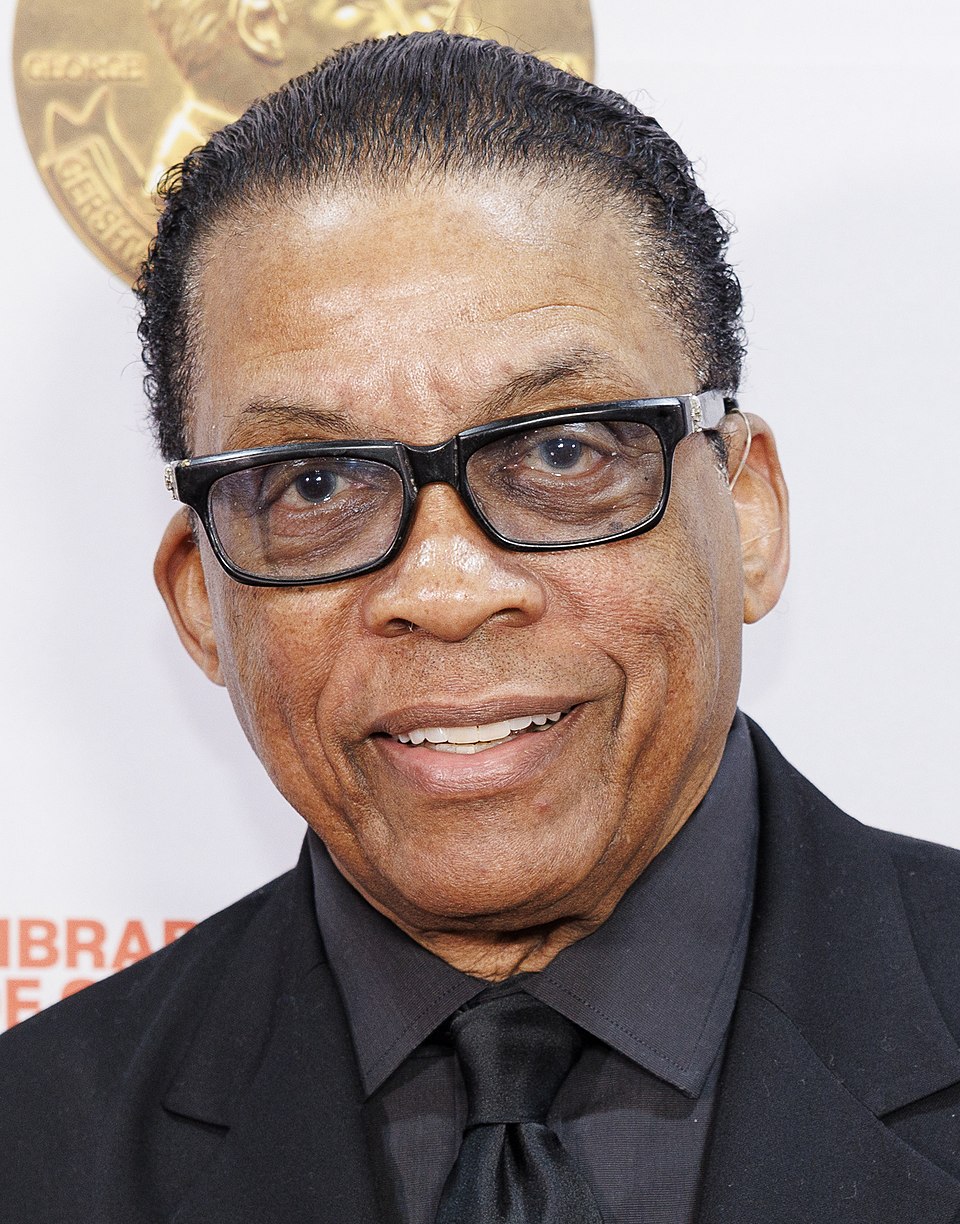
Herbert Jeffrey Hancock was born in Chicago and was a piano prodigy, performing Mozart with the Chicago Symphony at age 11. He emerged in the early 1960s, joining Miles Davis’s Second Great Quintet (1963-1968). Hancock led his own groups exploring acoustic jazz, fusion, funk, and electronic music. He scored films including “‘Round Midnight” (Oscar winner) and remained innovative throughout a six-decade career. Hancock won multiple Grammy Awards and continues performing and recording. He is recognized as one of jazz’s most important and influential figures.
Musical Style
Hancock’s arranging spans multiple styles from modal jazz to fusion to funk. His 1960s arrangements incorporated modal harmonies and open structures influenced by Davis. Hancock’s fusion arrangements featured electric instruments, funk rhythms, and sophisticated harmonic language. His arrangements balance sophistication with groove, maintaining jazz complexity while creating accessible rhythms. Hancock pioneered electronic instrument use in jazz arranging. His style emphasizes color and texture alongside harmony and melody. Hancock’s arrangements evolved constantly, embracing new technologies and styles while maintaining jazz authenticity. His work influenced fusion, contemporary jazz, and hip-hop.
Orchestration Techniques
Hancock’s orchestration techniques evolved dramatically across his career, from modal acoustic jazz voicings to electronic layering in fusion contexts, but consistently demonstrate sophisticated understanding of timbre, register, and harmonic density. His early quintet arrangements employ quartal voicings in the piano, stacking perfect fourths that avoid traditional tertian function, creating suspended, ambiguous harmonies that became characteristic of the Miles Davis Quintet sound. The horn writing in his acoustic work features spaced voicings with wide intervals between trumpet and tenor saxophone, often placing them two octaves apart to create open, airy textures that emphasize intervallic relationships. Hancock’s approach to sectional writing in small group contexts often involves unison or octave doublings between piano and bass during composed passages, establishing thematic material before releasing into open improvisation. His contrapuntal technique includes extensive use of pedal point in the left hand while right-hand voicings move through modal progressions, creating tension through static bass against mobile harmony. In his fusion period, Hancock pioneered layered synthesizer textures, using multiple keyboard voices to create composite timbres unavailable from acoustic instruments—stacking analog synthesizer patches with electric piano to produce thick, textured sounds. Rhythmic notation in his funk arrangements is precise, with specific attention to ghost notes, anticipated bass hits, and clavinet patterns that define groove, often notating exact rhythmic placement of sixteenth-note subdivisions. His use of the Fender Rhodes electric piano as an orchestrational element introduced new timbral possibilities, exploiting the instrument’s natural tremolo and sustain characteristics for pad-like voicings. Hancock’s dynamic architecture in fusion contexts relies on textural density rather than volume alone, adding or subtracting instrumental layers to create waves of intensity while maintaining consistent groove. His treatment of horn backgrounds in electric contexts often involves short, punctuated stabs in tight voicings that interact with synthesizer riffs in call-and-response fashion. Hancock’s signature technique in his funk arrangements involves ostinato bass lines using repetitive, syncopated patterns over which harmonic movement occurs in upper voices, creating static-yet-moving texture that became foundational for jazz-funk. His ensemble configurations blend acoustic and electronic instruments, carefully balancing the attack characteristics of each to create unified ensemble sound despite disparate timbral sources.
Top Albums
Herbie Hancock - “Maiden Voyage” (1965)
Hancock’s arrangements for quintet demonstrate his modal jazz approach. The title track’s arrangement creates oceanic atmospheres through open harmonies and flowing rhythms. What makes these arrangements remarkable is their balance between structure and freedom—Hancock provides clear frameworks that inspire improvisation. The voicings are spacious and colorful, influenced by Gil Evans and Bill Evans. These arrangements influenced modal and contemporary jazz widely.
Herbie Hancock - “Head Hunters” (1973)
Hancock’s fusion arrangements incorporating funk rhythms revolutionized jazz. “Chameleon” features groove-based arrangements with sophisticated harmonies underlying funk rhythms. What’s groundbreaking is how Hancock maintained jazz sophistication within commercial funk contexts. The arrangements use synthesizers and electric instruments in new ways. This album influenced fusion, jazz-funk, and electronic jazz, demonstrating that jazz could embrace popular forms without losing substance.
Herbie Hancock - “The New Standard” (1996)
Hancock’s arrangements of pop songs including Nirvana and Peter Gabriel demonstrate his continued evolution. The charts apply jazz arranging sophistication to rock and pop material. What makes these arrangements special is how Hancock respects source material while transforming it through jazz lens. The arrangements prove that jazz arranging concepts apply across genres. This work influenced contemporary jazz’s engagement with popular music.