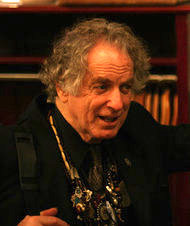
David Amram (b. 1930)

Biography

David Amram was born in Philadelphia and became one of America’s most versatile composer-arrangers, working across jazz, classical, world music, and film. He played French horn and piano, studying at Oberlin Conservatory and George Washington University before moving to New York. Amram arranged for and performed with Dizzy Gillespie, Lionel Hampton, Charles Mingus, and others while maintaining an active classical career. He scored films including “The Manchurian Candidate,” “Splendor in the Grass,” and “The Arrangement,” and composed operas, symphonies, and chamber works. Amram also served as the first composer-in-residence for the New York Philharmonic. His arrangements incorporate world music influences (particularly Latin American and Middle Eastern) with jazz and classical elements. Amram remained remarkably productive into his 90s, composing, performing, and conducting internationally. His eclectic approach demonstrates that arrangers can work across multiple genres while maintaining artistic integrity and a distinctive voice.

Musical Style

Amram’s arranging style integrated diverse musical traditions—jazz improvisation, classical orchestration, and world music rhythms and scales—into a personal synthesis. His arrangements featured colorful orchestration drawing on his experience as French horn player and his deep knowledge of world instruments and techniques. What distinguished Amram’s work was its genuine integration of influences rather than superficial borrowing—he understood the musical logic of different traditions and merged them organically. His voicings often incorporated modal harmonies, quartal structures, and unusual instrumental combinations. Amram wrote for improvisation intelligently, creating frameworks that encouraged spontaneity while providing strong compositional foundations. His style was warm and humanistic, always emphasizing melody and emotional communication over mere technical display. Amram’s work represented American eclecticism at its best, demonstrating that sophisticated technique could serve accessible, emotionally direct music.

Orchestration Techniques

Amram’s orchestration techniques reflect his extensive knowledge of world music traditions and classical orchestration, integrated with jazz improvisation in ways that create genuinely multicultural musical textures. His voicings frequently employ modal harmonies derived from Middle Eastern maqam and Latin American folk traditions, using scales beyond standard Western major-minor system to create exotic colorations that are authentic rather than superficially exotic. The French horn functions prominently in Amram’s arrangements, exploiting the instrument’s lyrical middle register for melodic statements and its ability to blend with both brass and woodwind sections, creating bridge textures unavailable in traditional jazz orchestration. His integration of classical woodwinds—oboe, bassoon, English horn—into jazz contexts involves careful attention to their natural registers and characteristic sounds: oboe in its upper register providing bright, penetrating melodic lines; bassoon doubling bass lines with woody color; English horn adding melancholic middle-voice textures. Amram’s contrapuntal approach often involves heterophonic textures where multiple instruments ornament the same melodic material in ways characteristic of Middle Eastern and Latin American traditions, creating rich melodic surfaces that differ from Western polyphony. His sectional writing combines traditional jazz horn sections with classical orchestral forces, balancing amplified rhythm section against acoustic strings and woodwinds through careful dynamic markings and orchestrational spacing. The percussion writing in Amram’s Latin-influenced works demonstrates deep understanding of authentic Afro-Cuban and Brazilian rhythmic patterns, with specific notation for clave, cascara, and other traditional patterns that serve as rhythmic foundation. His use of world instruments—Middle Eastern dumbek, Latin American guiro and claves, folk whistles and flutes—is integral rather than decorative, with these instruments functioning as essential voices in the orchestral texture. Amram’s dynamic architecture features gradual builds that accumulate layers from different cultural sources, creating crescendos where jazz, classical, and world music elements combine into unified climaxes. Rhythmic notation in his scores often incorporates specific folk rhythmic patterns notated precisely to preserve their authentic feel while allowing jazz musicians to improvise within these frameworks. His treatment of improvisation involves providing scalar material derived from world music modes—Phrygian dominant for Middle Eastern flavor, various Brazilian modes for Latin contexts—giving improvisers specific coloristic palettes that maintain stylistic authenticity. Instrumental combinations in his arrangements pair unexpected instruments: French horn with congas, oboe with jazz saxophone, classical strings with Latin percussion, creating composite timbres that transcend single cultural traditions. A signature technique involves using sustained French horn pedals in the middle register as harmonic anchoring while other instruments—both jazz and classical—create melodic and rhythmic activity above and around, exploiting the horn’s sustaining capability and blending quality. Amram’s approach to film scoring influences his concert arranging, with his orchestrations creating narrative and programmatic effects through timbral choices and textural changes that serve emotional storytelling.

Top Albums

David Amram - “Jazz Studio 2” (1957)

Amram’s early arrangements for various jazz sessions showcase his ability to integrate classical and world music influences into jazz contexts. His charts feature unusual instrumental combinations (French horn, oboe, bassoon in jazz settings) and sophisticated harmonies. What makes these arrangements notable is their naturalness—Amram’s classical instruments never sound forced or gimmicky but function as genuine jazz voices. His composition “Splendor in the Grass” (later used for the film) demonstrates his gift for memorable melodies with sophisticated harmonic settings. The work shows Amram’s early mastery of cross-genre arranging.

David Amram - “Latin-Jazz Celebration” (2002)

Amram’s arrangements integrating Latin rhythms, jazz harmony, and classical orchestration demonstrate his mature synthesis. His charts feature authentic Latin percussion alongside jazz and classical instruments, creating rich, multicultural textures. What’s particularly impressive is Amram’s understanding of Latin music—his arrangements respect rhythmic traditions while incorporating jazz improvisation and classical development. His composition “Ode to Lord Buckley” showcases his ability to create extended forms that integrate diverse elements coherently. The album proves Amram’s continued vitality and his mastery of world jazz fusion.

David Amram and Friends - “Giants of the Night” (2013)

Amram’s later arrangements show a lifetime of experience distilled into remarkably direct, effective writing. His charts for various configurations maintain his signature eclecticism while achieving new clarity and focus. What makes these arrangements fascinating is their combination of sophistication and accessibility—Amram writes music that engages both musicians and general audiences. His arrangement of “Crossing the Bar” demonstrates his gift for emotional directness within sophisticated harmonic and rhythmic frameworks. The album shows that Amram remained creative and relevant into his 80s, proving that artistic growth needn’t cease with age.