Van Alexander (1915-2015)

Biography

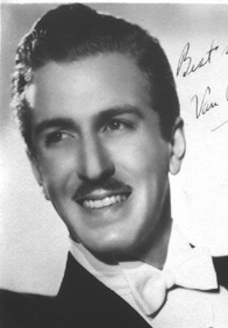
Alexander Van Vliet Feldman, known professionally as Van Alexander, was born in New York City. He began arranging as a teenager and led his own band in the late 1930s before becoming one of the most successful arrangers in popular music. Alexander arranged for Chico Marx, Les Brown, Gordon Jenkins, Dean Martin, and countless others. He scored over 500 television episodes including “Bewitched,” “I Dream of Jeannie,” and “Hazel.” Alexander also taught arranging, influencing generations of arrangers through his instructional materials. He lived to age 100, remaining active in music education until late in life. His career spanned from the swing era to the 21st century, demonstrating remarkable adaptability.

Musical Style

Alexander’s arranging style featured sophisticated voicings, strong melodies, and professional polish. His arrangements balanced commercial appeal with musical substance. Alexander had remarkable versatility, writing effectively for swing bands, pop singers, and television. His voicings were warm and full, creating rich textures that supported without overwhelming. Alexander’s style emphasized melody and clear structure—his arrangements were always logical and well-crafted. He understood how to adapt his approach for different contexts while maintaining high standards. Alexander’s work represented professional excellence across multiple genres, demonstrating that skilled arrangers could sustain long careers through adaptability and consistent quality.
Orchestration Techniques

Alexander’s voicings demonstrate swing-era fundamentals refined with modern harmonic awareness, employing triadic structures with added sixths and major sevenths that create warmth without the density of bebop-derived voicings. His brass writing utilizes section unisons and octave doublings extensively, creating powerful projection through acoustic reinforcement while maintaining clarity essential for commercial applications. Saxophone section soli employ four-way close harmony with the lead doubled at the lower octave, the classic swing-band sound that emphasizes blend and projection. Contrapuntal writing includes simple counter-lines in trombone section beneath saxophone melody, maintaining textural interest without complex polyphony that might obscure the primary melodic content. His string writing pairs violins with brass section, doubling trumpet lines in unison to create bright, commercially appealing timbres that project clearly through radio and television broadcast systems. Register distribution centers all instruments in their optimal ranges for recording fidelity, avoiding extreme tessituras that might cause distortion or inconsistent frequency response. Rhythmic notation is precisely articulated with clear accent markings that ensure ensemble precision essential for commercial studio work where rehearsal time is limited. Dynamic architecture follows predictable verse-chorus structures with clearly delineated dynamic levels for each section, creating broadcast-friendly arrangements with consistent levels. Textural approaches favor homophonic block voicing where all parts move rhythmically together, creating unified ensemble statements that translate well through broadcast media. His signature technique involves stereo orchestration where instrumental sections are spatially separated in the stereo field (brass left, strings right, rhythm center), exploiting stereo technology to create apparent ensemble size and depth while maintaining clear separation of timbral elements.

Top Albums

Les Brown and His Band of Renown - various recordings (1940s-1950s, Alexander arrangements)

Alexander’s arrangements for Brown showcase his swing era style. His charts feature excellent section writing and sophisticated voicings. What makes Alexander’s Brown arrangements notable is their perfect balance between sophistication and accessibility—they satisfy both musicians and dancers. His arrangement of “Leap Frog” became one of Brown’s signatures, demonstrating Alexander’s gift for creating memorable, swinging charts. The work shows Alexander’s understanding of big band dynamics and pacing.

Dean Martin - various Capitol recordings (1950s-1960s, Alexander arrangements)

Alexander’s arrangements for Martin demonstrate his gift for supporting vocalists. His charts create sophisticated orchestral settings that enhance Martin’s relaxed delivery. What’s particularly impressive is how Alexander balances the orchestra—his arrangements are interesting enough to stand alone yet always keep focus on the singer. His use of strings and woodwinds creates romantic atmospheres perfect for Martin’s style. The arrangements show Alexander’s range beyond jazz into sophisticated pop.

Van Alexander Orchestra - “Swing! Staged for Sound” (1958)

Leading his own orchestra in the stereo era, Alexander created arrangements showcasing high-fidelity recording. His charts demonstrate his command of orchestral resources and understanding of recording technology. What makes this album interesting is how Alexander uses stereo effects within musical arrangements—the stereo placement serves musical purposes rather than mere gimmickry. The arrangements prove that Alexander remained current despite having started in the swing era, adapting to new technologies while maintaining musical standards.