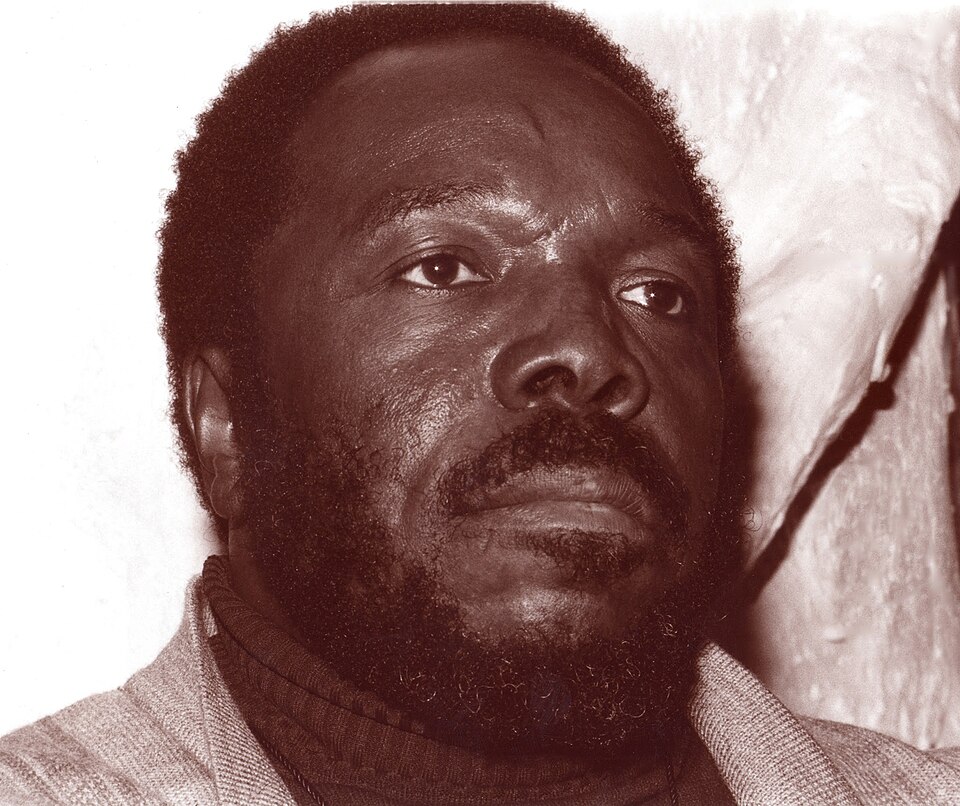
Portrait of Thad Jones
Perfoto, at Jazzhus Montmartre, Copenhagen, via Wikimedia Commons · CC BY-SA 4.0

Thad Jones (1923-1986)

Biography

Thaddeus Joseph Jones was born in Pontiac, Michigan, into a musical family (brothers Hank and Elvin were also jazz stars). After playing trumpet with several Detroit bands, Thad joined Count Basie’s orchestra (1954-1963), where he contributed arrangements and compositions. In 1965, he co-founded the Thad Jones/Mel Lewis Orchestra, which became the Vanguard Jazz Orchestra. The band’s Monday night residency at New York’s Village Vanguard became legendary. Jones moved to Denmark in 1978 to lead the Danish Radio Big Band before returning to the U.S. shortly before his death. His compositions and arrangements remain big band standards.

Musical Style

Jones’s arranging style combined sophisticated harmonic language with deep blues feeling. His compositions and arrangements featured unexpected harmonic turns and complex melodies that were nonetheless singable and memorable. Jones had a gift for writing pieces that sounded both modern and timeless. His voicings were rich and dense, often featuring close harmonies and chromaticism. Jones wrote brilliantly for trumpet section, using extended techniques and challenging passages. His arrangements balanced composition and improvisation perfectly, giving soloists exciting frameworks while maintaining strong written material. Jones’s style incorporated bebop harmonies, blues, and hints of modernist classical music synthesized into a personal voice. His arrangements never sounded academic despite their sophistication—they always swung hard.
Orchestration Techniques

Jones’s voicings are characterized by dense chromatic clusters employing close-position structures with major and minor seconds prominently featured, creating rich, thick sonorities that require precise intonation from all sections. His trumpet section writing utilizes the full range including altissimo passages (up to written C6 and beyond), demanding lead trumpet with exceptional endurance and accuracy while inner voices maintain complex chromatic movement. Saxophone soli passages employ five-part close voicing with chromatic passing tones in every voice, creating a “wall of sound” effect where parallel chromatic motion produces sophisticated harmonic density. Contrapuntal writing features complex polyphony with independent melodic lines in brass and saxophone sections simultaneously, often employing canonic devices where themes are stated at different time intervals across sections. His use of tritone substitutions and chromatic mediant relationships is pervasive, with harmonic progressions moving by major thirds or tritones rather than traditional cycle-of-fifths motion. Register exploitation includes extreme brass writing with muted flugelhorns in their lowest register providing bass-like foundation while trumpets soar in their upper range. Rhythmic devices include complex syncopation patterns with accents placed on weak beats and off-beat subdivisions, creating rhythmic tension that propels the arrangement forward. Dynamic architecture employs sudden subito contrasts from fortissimo to piano, creating dramatic impact through unexpected dynamic shifts. Textural approaches include unison lines doubled across all sections creating powerful statements, alternating with thin two-voice textures that provide dramatic contrast. His signature orchestration technique involves “soli thickening,” where a saxophone soli is doubled by muted brass an octave above or below, creating a composite section sound with maximum harmonic density and unique timbral blend.

Top Albums

Thad Jones/Mel Lewis Orchestra - “Live at the Village Vanguard” (1967)

Jones’s arrangements and compositions including “Big Dipper” and “Three and One” showcase his genius. What makes these arrangements remarkable is their combination of sophistication and accessibility—they’re complex enough to interest musicians yet immediately engaging for listeners. “A Child Is Born” demonstrates Jones’s gift for beautiful, harmonically rich ballad writing. The arrangements feature his characteristic unexpected harmonic moves that surprise without seeming forced. This album established the band and influenced all subsequent modern big bands.

Thad Jones/Mel Lewis Orchestra - “Central Park North” (1969)

More Jones arrangements including the title track and “It Only Happens Every Time” demonstrate his continued evolution. What’s particularly notable is how Jones creates variety within his established style—each piece has its own character while sounding unmistakably like Thad Jones. His arrangement techniques influenced arrangers worldwide, particularly his use of dense voicings and unexpected harmonic substitutions. The album represents modern big band arranging at its peak.

Count Basie Orchestra - “The Complete Atomic Basie” (1957, Jones arrangements)

Jones contributed several arrangements to Basie while a member, showing his ability to write in the Basie idiom while maintaining his voice. His chart for “Shiny Stockings” (actually by Frank Foster) and his own compositions demonstrate his range. What’s interesting is how Jones adapted his sophisticated approach to Basie’s simpler aesthetic—the arrangements are more harmonically adventurous than typical Basie but respect the band’s essential qualities.

Pieces & Ensembles

Three and One — Presenting Thad Jones/Mel Lewis and the Jazz Orchestra (1966)

Trumpets Tpt Tpt Tpt Tpt Flg
Trombones & Low Brass Tbn Tbn Tbn BTb
Saxes & Woodwinds AS AS TS TS BS
Rhythm Section Pno Gtr Bass Dr

Thad on flugelhorn out front of the classic lineup; the five reeds all double flutes and clarinets; Hank Jones on piano.

Big Dipper — All My Yesterdays: The Debut 1966 Recordings at the Village Vanguard (1966)

Trumpets Tpt Tpt Tpt Tpt Flg
Trombones & Low Brass Tbn Tbn Tbn BTb
Saxes & Woodwinds AS AS TS TS BS
Rhythm Section Pno Bass Dr Gtr
Faded seats are standard big band chairs this piece doesn't use.

Opening night at the Village Vanguard, February 7, 1966 — no guitar on the bandstand that night; Richard Davis on bass, Mel Lewis on drums.

A Child Is Born — Consummation (1970)

Trumpets Tpt Tpt Tpt Tpt Flg
Trombones & Low Brass Tbn Tbn Tbn BTb
Saxes & Woodwinds AS AS TS TS BS
Rhythm Section Pno Bass Dr Gtr
Faded seats are standard big band chairs this piece doesn't use.

The reeds double flutes and alto flutes for the ballad texture; Roland Hanna on piano, Thad's flugelhorn carrying the melody.