Jazz arranging · Early Jazz & Dance Bands
FletcherHenderson
1897–1952 arranger · composer · orchestrator
Henderson's arranging style evolved from the simpler stock arrangements of early jazz to sophisticated swing orchestrations.
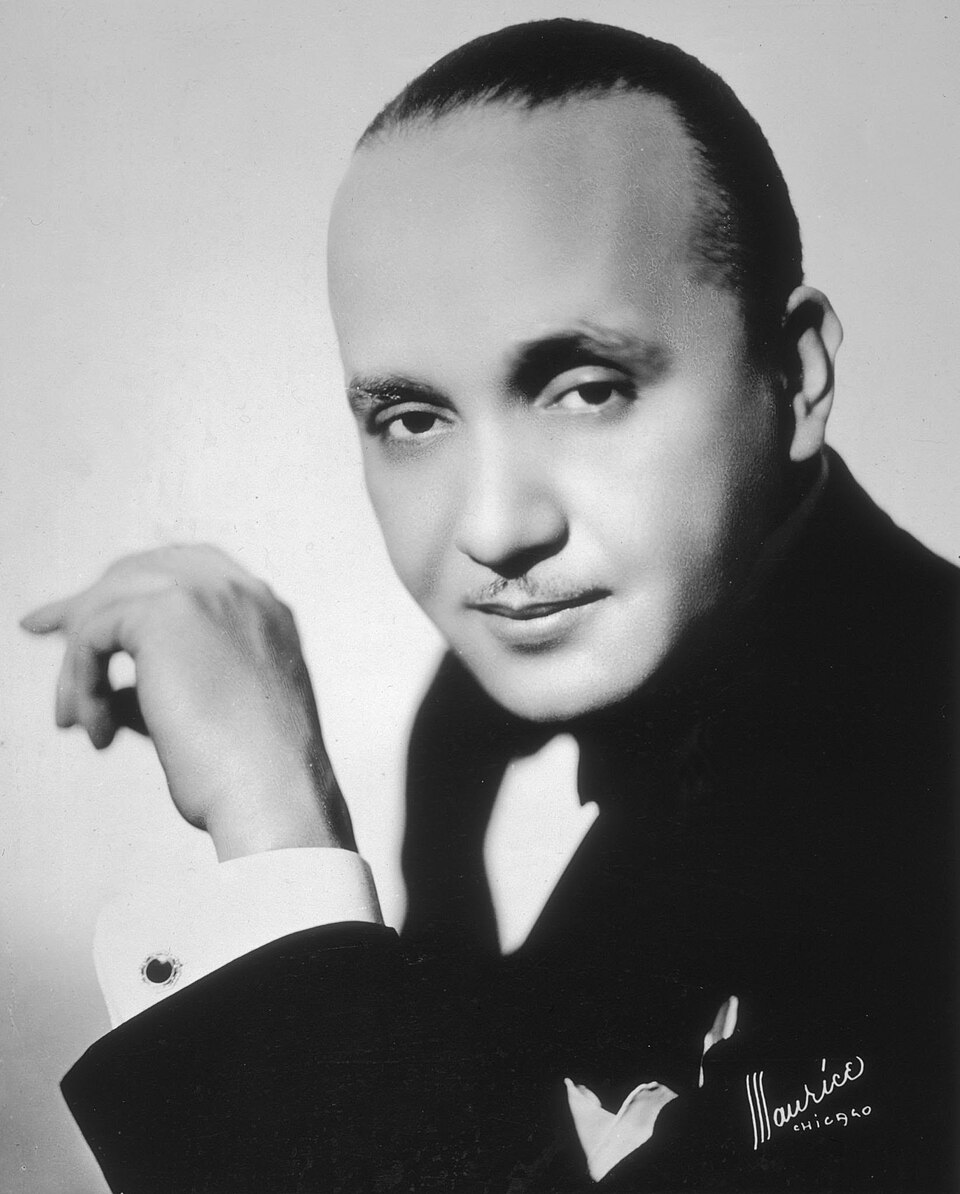
.jpg)
- Predominant era
- Early Jazz & Dance Bands
- Lifespan
- 1897–1952
- Signature
- propulsive motion
Bio · 26 words
Born in Cuthbert, Georgia, Fletcher Hamilton Henderson Jr. studied chemistry and mathematics at Atlanta University before moving to New York in 1920 to pursue graduate studies.
01
Musical style
Sound DNA
Five shared dimensions make the arranger’s musical priorities visible at a glance.
Varied
Contrasting families shape the sound.
Compact
Ideas arrive in tightly packed frames.
Layered
Registers work as distinct layers.
Transparent
Individual lines stay easy to follow.
Propulsive
Rhythm actively drives the architecture.
02
Orchestration
Technique deck
Select a card to spotlight a device drawn from this arranger’s orchestral language.
03
Music first
Scores & orchestras
Switch recordings to compare how this arranger’s musical priorities shape each orchestral profile.
The Fletcher Henderson Story: A Study in Frustration · 1923-1938
The Fletcher Henderson Story: A Study in Frustration
This four-disc compilation is essential for understanding the development of swing arranging.
Listen forNotice how motion shapes the orchestral profile.
Find listening example on YouTubeProfile derived from the arranger’s documented style and recording notes; exact instrumentation is not asserted.
Tidal Wave · 1931-1934
Yeah Man
This collection captures Henderson's orchestra at its peak, with arrangements that showcase his gift for creating excitement and momentum.
Listen forNotice how motion shapes the orchestral profile.
Find listening example on YouTubeProfile derived from the arranger’s documented style and recording notes; exact instrumentation is not asserted.
The Birth of Swing
King Porter Stomp,
While technically Goodman's recordings, this album showcases Henderson's most influential arrangements, including "King Porter Stomp," "Blue Skies," and "Sometimes I'm Happy." What's…
Listen forNotice how motion shapes the orchestral profile.
Find listening example on YouTubeProfile derived from the arranger’s documented style and recording notes; exact instrumentation is not asserted.
04
Start here
Three essential albums
One line each—enough context to choose the next listen.
- 01 1923-1938 The Fletcher Henderson Story: A Study in FrustrationFletcher Henderson and His Orchestra This four-disc compilation is essential for understanding the development of swing arranging.
- 02 1931-1934 Tidal WaveFletcher Henderson This collection captures Henderson's orchestra at its peak, with arrangements that showcase his gift for creating excitement and momentum.
- 03 — The Birth of SwingBenny Goodman While technically Goodman's recordings, this album showcases Henderson's most influential arrangements, including "King Porter Stomp," "Blue Skies," and "Sometimes I'm Happy." What's…