Jazz arranging · Early Jazz & Dance Bands
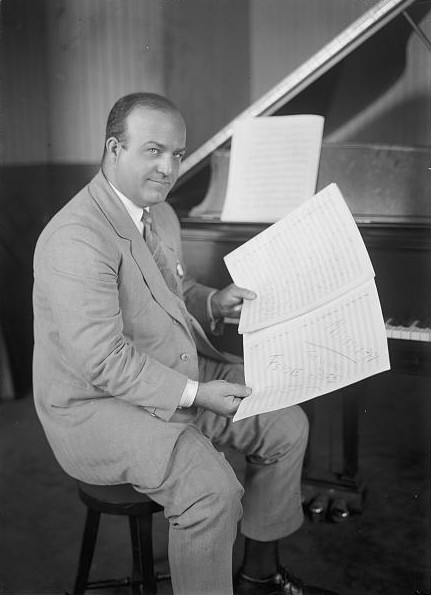
FerdeGrofé
1892–1972 arranger · composer · orchestrator
Grofé's arranging style was characterized by symphonic scope and classical orchestration techniques applied to jazz and…

- Predominant era
- Early Jazz & Dance Bands
- Lifespan
- 1892–1972
- Signature
- iridescent color
Bio · 34 words
Ferdinand Rudolph von Grofé was born in New York City into a musical family. He worked as a pianist in various contexts before joining Paul Whiteman's orchestra as pianist and chief arranger in 1920.
01
Musical style
Sound DNA
Five shared dimensions make the arranger’s musical priorities visible at a glance.
Iridescent
Instrumental color leads the design.
Compact
Ideas arrive in tightly packed frames.
Layered
Registers work as distinct layers.
Transparent
Individual lines stay easy to follow.
Suspended
Motion unfolds with patience.
02
Orchestration
Technique deck
Select a card to spotlight a device drawn from this arranger’s orchestral language.
03
Music first
Scores & orchestras
Switch recordings to compare how this arranger’s musical priorities shape each orchestral profile.
Rhapsody in Blue
Rhapsody in Blue
Grofé's orchestration of Gershwin's piano concerto became the standard version, and this 1927 recording with Whiteman conducting demonstrates why.
Listen forNotice how color shapes the orchestral profile.
Find listening example on YouTubeProfile derived from the arranger’s documented style and recording notes; exact instrumentation is not asserted.
Grand Canyon Suite · 1931
Cloudburst
While not strictly jazz, this orchestral suite demonstrates Grofé's arranging genius applied to American programmatic music.
Listen forNotice how color shapes the orchestral profile.
Find listening example on YouTubeProfile derived from the arranger’s documented style and recording notes; exact instrumentation is not asserted.
Symphonic Jazz · 1924-1930
Grand Fantasia on American Folk Songs
This collection features Grofé's symphonic jazz arrangements including "Grand Fantasia on American Folk Songs" and elaborate treatments of popular songs.
Listen forNotice how color shapes the orchestral profile.
Find listening example on YouTubeProfile derived from the arranger’s documented style and recording notes; exact instrumentation is not asserted.
04
Start here
Three essential albums
One line each—enough context to choose the next listen.
- 01 — Rhapsody in BluePaul Whiteman Orchestra Grofé's orchestration of Gershwin's piano concerto became the standard version, and this 1927 recording with Whiteman conducting demonstrates why.
- 02 1931 Grand Canyon SuiteFerde Grofé While not strictly jazz, this orchestral suite demonstrates Grofé's arranging genius applied to American programmatic music.
- 03 1924-1930 Symphonic JazzPaul Whiteman Orchestra This collection features Grofé's symphonic jazz arrangements including "Grand Fantasia on American Folk Songs" and elaborate treatments of popular songs.