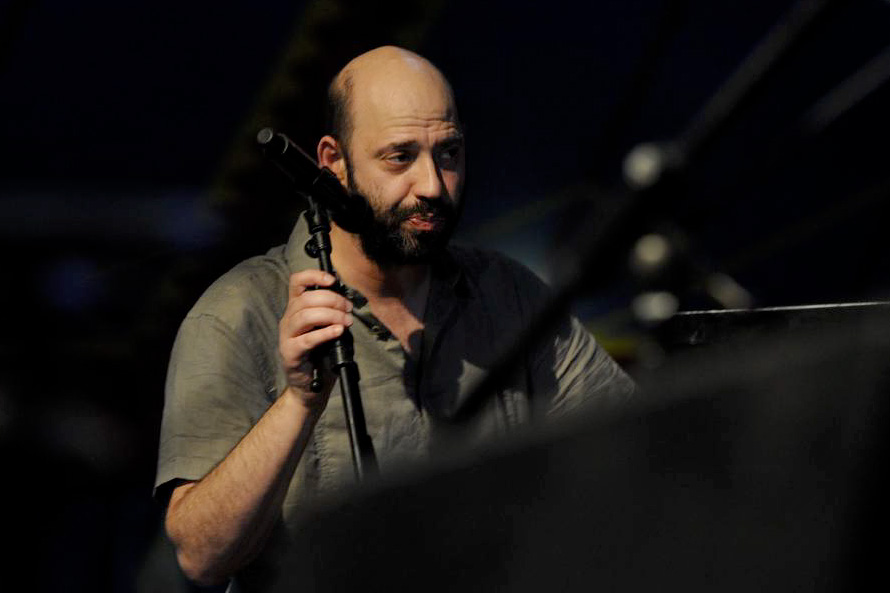
Guillermo Klein (b. 1970)

Biography

Guillermo Klein was born in Buenos Aires, Argentina, and became a pianist, composer, and arranger blending Argentine folk music with jazz. He studied at Berklee before establishing himself in New York. Klein leads Los Guachos, his ensemble featuring Argentine and American musicians creating unique cross-cultural synthesis. His arrangements feature sophisticated approaches combining South American rhythms (tango, milonga, chacarera) with jazz improvisation. Klein’s style demonstrates continued evolution of Latin jazz arranging beyond Cuban and Brazilian traditions. Albums like the “Los Guachos” series showcase his unique voice. Klein represents best of contemporary world jazz arranging, showing how specific cultural perspectives enrich jazz.

Musical Style

Klein’s arranging style blends Argentine folk music with jazz through sophisticated compositional approaches, featuring tango, milonga, and other Argentine rhythms combined with jazz harmonies and improvisation. His arrangements demonstrate deep understanding of both Argentine traditions and jazz. What distinguishes Klein’s work is its genuine cultural synthesis—his music emerges organically from Argentine sources while incorporating jazz authentically. His voicings incorporate bandoneon and other Argentine instruments naturally. Klein’s harmonic language combines tango sophistication with jazz, creating rich hybrid textures.

Orchestration Techniques

Klein’s voicing strategies integrate Argentine tango harmony (with its characteristic use of diminished seventh chords, chromatic voice leading, and dramatic modulations) with jazz extended tertian structures, creating harmonic hybrids that serve both traditions simultaneously. His sectional writing for Los Guachos employs flexible instrumentation where acoustic guitar, bandoneon, and traditional jazz instruments (saxophone, trumpet, trombone) function as equal voices rather than hierarchical sections, eliminating conventional big band stratification. Concerted passages feature unison melodic statements where disparate timbres (bandoneon alongside alto saxophone, guitar doubling bass line) create hybrid sonorities impossible in conventional jazz orchestration. Instrumental combinations exploit the textural possibilities of Argentine instruments: bandoneon providing sustained harmonic support with its distinctive bellows-driven sustain, acoustic guitar employing rasgueado strumming patterns derived from chacarera and zamba rhythms, and piano contributing both jazz comping and tango-style rhythmic punctuations. Contrapuntal techniques include sophisticated polyphonic writing where multiple independent melodic lines weave together, often employing canon and fugal techniques adapted to groove-based contexts, creating dense contrapuntal textures over dance-derived rhythmic foundations. Register exploitation is particularly notable in his use of bandoneon across its full range, from rich bass-register sustained tones to piercing upper-register melodic cries, integrating this distinctively Argentine sound into jazz harmonic contexts. Rhythmic devices incorporate Argentine folk patterns: 6/8 chacarera subdivisions layered against 4/4 jazz time, milonga’s characteristic habanera rhythm, and tango’s syncopated walking bass patterns, all integrated with jazz swing interpretation. Textural approaches favor transparency and acoustic intimacy, with Klein’s arrangements emphasizing chamber ensemble clarity where individual instrumental colors remain distinct rather than blending into homogeneous ensemble sonority. His preferred configuration is the medium ensemble (eight to twelve pieces) allowing for sufficient textural variety while maintaining the intimacy necessary for Argentine folk music’s emotional directness. Dynamic architecture employs gradual accumulation derived from folk music traditions: melodies building through varied repetition, harmonic intensification through added voices, and rhythmic acceleration creating dramatic climaxes characteristic of both tango and jazz development. Signature techniques include his use of “suspended time” passages where steady pulse temporarily dissolves into rubato sections reminiscent of tango’s dramatic pauses, and employment of ostinato patterns derived from chacarera and other Argentine folk forms that provide compositional scaffolding for extended improvisations.

Top Albums

Los Guachos - “Los Guachos” (2001)

Klein’s debut with his ensemble showcases his distinctive Argentine-jazz fusion. His arrangements feature authentic tango and folk rhythms combined with jazz improvisation. What makes these arrangements remarkable is their success at cultural integration—Klein creates genuinely hybrid music. His composition “Arenales” demonstrates his gift for memorable melodies with sophisticated development.

Guillermo Klein y Los Guachos - “Domador de Huellas” (2006)

Klein’s continued work demonstrates deepening sophistication. His arrangements maintain authentic Argentine character while achieving greater complexity. His composition “Valerio” showcases his ability to create extended forms integrating Argentine and jazz elements organically.

Cross-Cultural Significance

Klein’s work bringing Argentine perspectives to jazz enriches the music through specific cultural contributions beyond dominant Cuban and Brazilian Latin jazz traditions. His success demonstrates jazz welcomes diverse Latin American traditions when handled authentically.