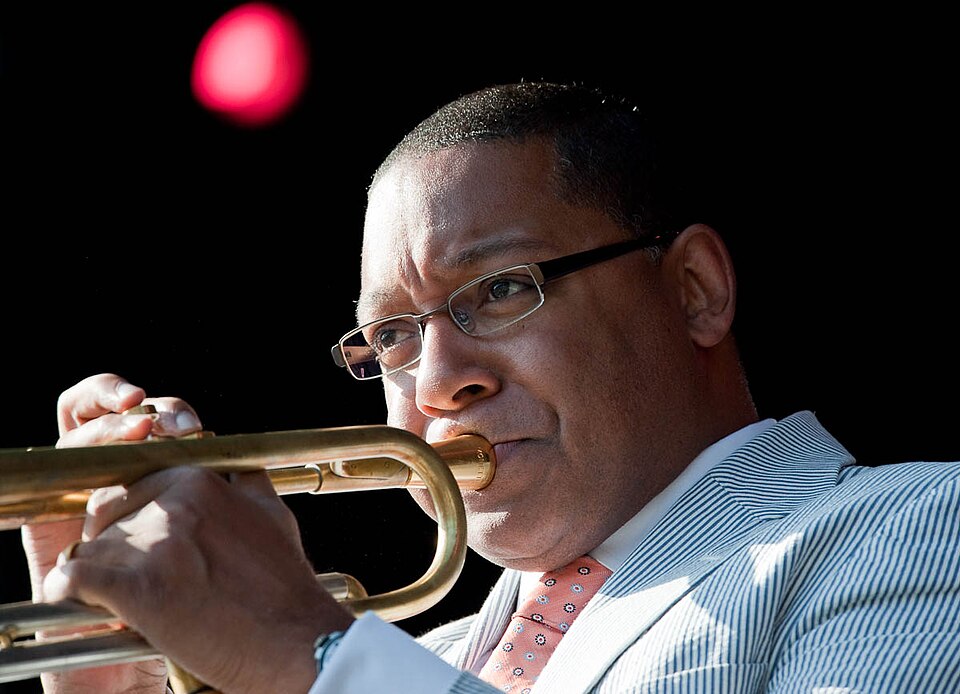
Wynton Marsalis (b. 1961)

Biography

Wynton Marsalis was born in New Orleans into a musical family and became jazz’s most visible public ambassador as trumpeter, composer, educator, and arranger. He won Pulitzer Prize for Music and numerous Grammy Awards across jazz and classical categories. Marsalis founded Jazz at Lincoln Center, which became a major cultural institution. He’s led the Lincoln Center Jazz Orchestra, creating arrangements and commissioning works that span jazz history. Marsalis’s efforts in jazz education through concerts, recordings, and documentaries have reached millions. His arrangements draw on entire jazz history from New Orleans to bebop, emphasizing traditional values and blues roots. While his conservative aesthetic has sparked debate, Marsalis’s impact on jazz’s institutional presence and public visibility is undeniable. His work demonstrates that serious engagement with jazz history can coexist with creating new work.

Musical Style

Marsalis’s arranging style emphasizes traditional jazz values, blues roots, and swing feeling while drawing on entire jazz history. His arrangements feature careful attention to historical styles from New Orleans polyphony to big band swing to bebop. What distinguishes Marsalis’s work is its pedagogical intent—his arrangements often demonstrate particular historical approaches or honor specific predecessors. His voicings range from traditional to contemporary depending on the specific project’s goals. Marsalis’s harmonic language respects blues and jazz traditions while incorporating sophisticated techniques when appropriate. His arrangements balance historical awareness with creative expression, seeking to honor tradition while creating fresh music. Marsalis’s style represents mainstream jazz values: respect for history, emphasis on blues feeling, and commitment to swing.

Orchestration Techniques

Marsalis’s voicing structures draw deliberately from historical precedents, employing New Orleans collective improvisation textures in some arrangements while utilizing Ellington-influenced extended chords in others, selecting techniques that serve specific educational or historical purposes. His sectional writing emphasizes blues-based voice leading where seventh chords resolve according to traditional patterns, with careful attention to the tritone resolution (guide tones moving by half-step) that defines functional jazz harmony. Soli passages frequently employ call-and-response patterns derived from African-American musical traditions, with brass phrases answered by saxophone sections in antiphonal dialogue. Instrumental combinations honor historical big band practices: plunger-muted trumpets and trombones for Ellington-style jungle effects, clarinet-led saxophone sections for swing-era textures, and open brass choir for powerful shout choruses. Contrapuntal techniques include New Orleans polyphony where trumpet, clarinet, and trombone weave independent melodic lines in traditional front-line fashion, demonstrating historical practices for contemporary audiences. Register treatment respects blues expression: trumpet parts include blues-inflected phrases in middle register where blue notes speak naturally, while trombone sections utilize smears and glissandi in their comfortable ranges for traditional jazz effects. Rhythmic notation specifies swing interpretation with explicit attention to triplet-based subdivision, demonstrating proper jazz phrasing through careful notation of articulations and accents on off-beats. Textural approaches span jazz history: two-beat New Orleans rhythm patterns, four-beat swing walking bass lines, and bebop-influenced rhythmic complexity all appear as conscious stylistic choices within historically-informed arrangements. Marsalis favors standard big band configurations but adjusts for historical accuracy—adding banjo for early jazz recreations, featuring bass clarinet for Ellington-style low-register color, or utilizing harmon-muted trumpet for Miles Davis tributes. His dynamic architecture follows classic big band principles with ensemble builds through section accumulation and strategic use of backgrounds behind soloists. The signature technique involves blues-based harmonic structures voiced with sophisticated extensions—ninth, eleventh, and thirteenth chords that maintain blues feeling while demonstrating advanced harmonic knowledge, proving that tradition and sophistication coexist within jazz practice.

Top Albums

Lincoln Center Jazz Orchestra - “They Came to Swing” (1994)

Marsalis’s arrangements and programming for the Lincoln Center Jazz Orchestra demonstrate his approach to big band jazz. His charts honor swing era traditions while bringing contemporary energy. What makes these arrangements notable is their success at making historical music live for contemporary audiences—Marsalis doesn’t merely recreate but revitalizes. His arrangements alongside historical charts create dialogues between past and present. The work demonstrates Marsalis’s gifts as curator-arranger, contextualizing jazz history through performance.

Wynton Marsalis - “Blood on the Fields” (1997)

Marsalis’s extended composition addressing slavery and jazz’s African-American roots demonstrates his ambitions as composer-arranger. His work for orchestra and jazz ensemble creates extended narrative through musical means. What’s particularly impressive is Marsalis’s integration of diverse jazz styles within coherent framework—from spirituals to blues to swing, all serve larger compositional vision. The oratorio won Pulitzer Prize and represents Marsalis’s mature synthesis of composition and jazz tradition.

Lincoln Center Jazz Orchestra - Various Recordings

Marsalis’s ongoing work with the Lincoln Center Jazz Orchestra demonstrates sustained commitment to jazz arranging and repertoire development. His programming spans jazz history, commissioning new arrangements while performing classics. What makes this work important is its institutional impact—Marsalis’s efforts ensure big band jazz maintains high-profile platform. His arrangements and commissions contribute to jazz’s continued vitality, demonstrating that serious institutional support can benefit the music when guided by knowledgeable leadership.