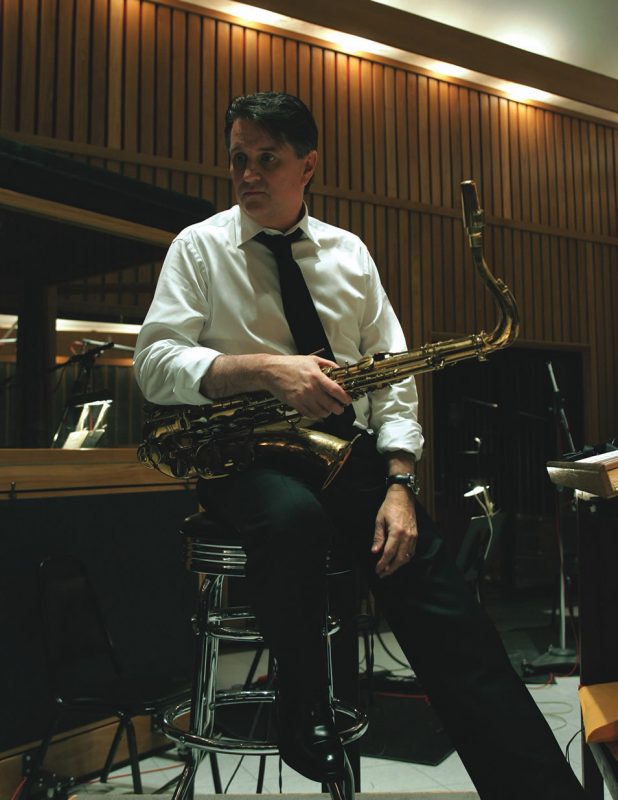
Gordon Goodwin (b. 1954)
Biography
Gordon Goodwin was born in Kansas and became one of contemporary jazz’s most successful big band leaders and arrangers. He studied music before moving to Los Angeles, where he worked in studios and developed his arranging skills. In 2000, Goodwin formed the Big Phat Band, which has won multiple Grammy Awards and achieved remarkable commercial and critical success. His arrangements combine traditional big band values with contemporary production values and grooves, creating music that appeals to both musicians and general audiences. Goodwin has also composed film and television scores. His success demonstrates that big band jazz remains vital and can find audiences when executed at the highest levels with contemporary sensibilities. The Big Phat Band represents perhaps the most commercially successful contemporary big band, proving that quality and popularity aren’t mutually exclusive.
Musical Style
Goodwin’s arranging style combines traditional big band values with contemporary production, grooves, and energy, featuring exciting, high-energy charts with sophisticated harmonies and tight ensemble writing. His arrangements demonstrate complete mastery of big band orchestration while incorporating contemporary sounds and approaches. What distinguishes Goodwin’s work is its combination of sophistication and accessibility—his charts are complex enough to satisfy professional musicians yet remain engaging and exciting for general audiences. His voicings are powerful and colorful, creating big, exciting sounds. Goodwin’s harmonic language balances jazz tradition with contemporary touches. His arrangements feature strong melodies, infectious rhythms, and dynamic contrasts that create visceral excitement. Goodwin’s style represents contemporary big band at its most successful: technically excellent, energetic, and widely appealing.
Orchestration Techniques
Goodwin’s orchestration maximizes power and brilliance through dense voicings in upper registers, frequently employing tight cluster voicings in trumpets (seconds and minor thirds) that create his signature aggressive, cutting sound. His saxophone section writing utilizes close-position voicings in their upper registers, often moving in parallel motion through chromatic passages that showcase the section’s technical virtuosity and intonation precision. Sectional approaches emphasize rhythmic precision and ensemble unanimity, with brass and saxophones frequently executing complex syncopated figures in perfect rhythmic unison, a technique requiring rehearsal discipline characteristic of professional studio musicians. Instrumental doublings are strategically deployed for maximum impact: tutti passages where all thirteen horns voice the same rhythm in spread voicings across five octaves, or unison brass lines doubled by saxophones for increased weight and projection. Contrapuntal techniques include sophisticated countermelodies where brass sustains long tones while saxophones execute rapid scalar passages, or vice versa, creating rhythmic and melodic independence without sacrificing vertical clarity. Register exploitation is dramatic and deliberate, placing trumpets consistently in their upper register (written G5 to C6) for brilliance and power, while trombones operate in their powerful middle register for harmonic foundation, and saxophones span their full ranges for color variety. Rhythmic notation is extremely precise, incorporating contemporary funk and Latin patterns with specific articulation markings (staccato, tenuto, accent combinations) that define the groove with mechanical exactitude. Textural variety ranges from stripped-down rhythm section passages to massive full-band climaxes, with Goodwin building intensity through additive orchestration and strategic instrument entries. His ensemble configuration is the standard big band augmented with contemporary rhythm section (drum set with multiple cymbals, electric bass options, piano), occasionally adding percussion for Latin influences. Dynamic architecture employs extreme contrasts, with sudden piano breaks followed by fortissimo tutti shout choruses, creating the visceral excitement and theatrical impact central to his popular appeal.
Top Albums
Gordon Goodwin’s Big Phat Band - “Swingin’ for the Fences” (2001)
Goodwin’s arrangements for his big band’s debut album showcase his distinctive voice. His charts feature powerful voicings, sophisticated harmonies, and infectious energy. What makes these arrangements notable is their perfect balance between substance and excitement—Goodwin writes complex music that nonetheless communicates directly and viscerally. His composition “Hit the Ground Running” demonstrates his gift for creating memorable, driving big band charts. The album won Grammy and established the Big Phat Band as major force in contemporary jazz.
Gordon Goodwin’s Big Phat Band - “XXL” (2003)
Goodwin’s arrangements here demonstrate continued evolution and ambition. His charts maintain his signature energy while incorporating even more sophisticated orchestration and harmonic approaches. What’s particularly impressive is Goodwin’s range—these arrangements span from subtle ballads to explosive burners, all executed at the highest level. His arrangement of “An American Elegy” shows his gifts for emotional depth alongside his trademark excitement. The album won multiple Grammys and represents Goodwin at peak form.
Gordon Goodwin’s Big Phat Band - “Life in the Bubble” (2014)
Goodwin’s later arrangements show sustained creativity and continued freshness. His charts maintain his signature combination of sophistication and energy while finding new approaches. What makes these arrangements fascinating is their maturity—Goodwin’s decades of experience result in writing of remarkable economy and effectiveness. His composition “The Jazz Police” showcases his continued melodic gifts, harmonic sophistication, and sense of humor. The album won Grammy and proves Goodwin remains vital and creative, continually finding fresh ways to make big band jazz exciting and relevant.