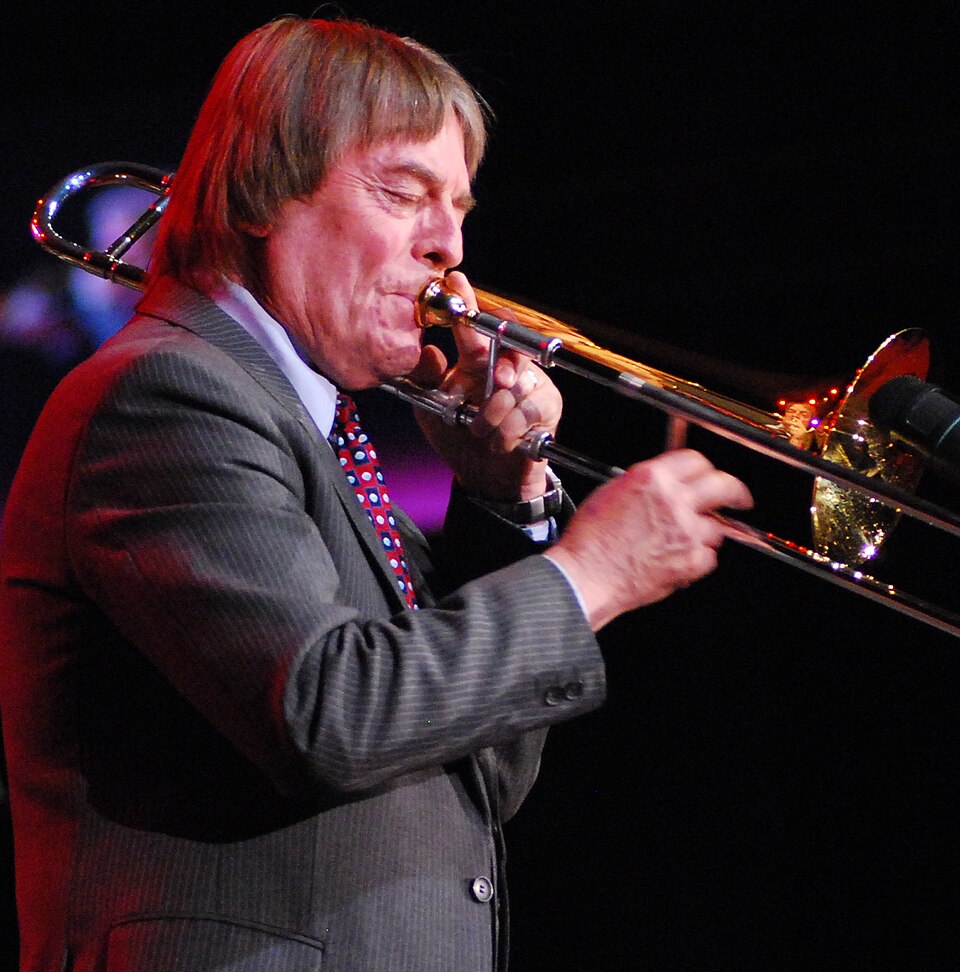
Bill Watrous (1939-2018)
Biography
William Russell Watrous III was born in Connecticut and became one of jazz’s finest trombonists while leading his own big bands. He played with numerous bands early in his career before becoming a first-call studio musician in New York and Los Angeles. Watrous led his own Manhattan Wildlife Refuge big band and later Refuge West on the West Coast. He recorded extensively as leader and worked in television and film studios. Watrous’s trombone playing was technically brilliant, featuring unprecedented facility and range. His arranging showcased his instrument while demonstrating understanding of big band writing across styles. Watrous worked extensively in studios on commercial projects while maintaining his jazz credentials through his own bands and recordings. He represented professional excellence in both playing and arranging, demonstrating that commercial studio work and artistic jazz weren’t mutually exclusive when executed at the highest levels.
Musical Style
Watrous’s arranging style featured excellent brass writing that showcased trombone while creating balanced, exciting big band charts. His arrangements combined technical excellence with musical substance, featuring challenging parts that served musical rather than merely display purposes. What distinguished Watrous’s work was his understanding of brass capabilities and limitations—as a virtuoso trombonist, he knew exactly what was possible and how to write effectively for brass sections. His voicings were bright and powerful, often featuring his trombone in prominent roles. Watrous’s harmonic language drew from bebop and contemporary jazz while remaining accessible. His arrangements balanced written material with improvisational space, understanding that jazz requires both composition and spontaneity. Watrous’s style represented professional excellence: polished, exciting, and musically substantial.
Orchestration Techniques
Watrous’s orchestrations exploit the full range of brass capabilities, frequently employing spread voicings that position the lead trumpet in the upper register with trombones filling the middle and lower voices in open position. His characteristic brass soli passages utilize five-part harmonizations with the lead trombone doubling the melody, often employing drop-2-and-4 voicings that create a brilliant, cutting sonority. Sectional writing demonstrates sophisticated interplay between brass and saxophone choirs, with call-and-response figures executed through precise rhythmic unisons and displaced accents. Watrous’s contrapuntal approach includes extensive use of imitative counterpoint, particularly in trombone section features where voices enter in staggered succession at intervals of the fourth or fifth. The trombone section writing exploits extended techniques including glissandi, falls, and lip trills, all notated with meticulous precision to ensure ensemble cohesion. His saxophone voicings typically employ tight cluster formations in the upper register, creating brightness that complements the brass sonority without competing for spectral space. Rhythmic devices include extensive use of hemiola patterns, displaced backbeats, and syncopated brass punctuations that create forward momentum. Textural variety is achieved through alternating between full tutti passages and exposed section features, with frequent use of pyramid voicings that build from bass trombone upward. Watrous favors the standard big band instrumentation but maximizes the trombone section’s presence through strategic doublings and prominent melodic assignments. Dynamic architecture employs terraced dynamics with sudden shifts between fortissimo brass shouts and pianissimo legato passages, creating dramatic contrast. His signature technique involves writing extremely high trombone parts that exploit the instrument’s brilliance in the upper partials, requiring exceptional technical facility from section players.
Top Albums
Bill Watrous - “Tiger of San Pedro” (1975)
Watrous’s arrangements for his Manhattan Wildlife Refuge big band showcase his gifts. His charts feature excellent brass writing with sophisticated harmonies and strong swing feeling. What makes these arrangements impressive is their balance—Watrous features his remarkable trombone playing within well-crafted ensemble frameworks. His composition “Tiger of San Pedro” demonstrates his gift for creating exciting, swinging charts that challenge players while remaining accessible to listeners. The voicings prove Watrous’s understanding of big band orchestration and his ability to write for his instrument without overwhelming the ensemble.
Bill Watrous - “The Manhattan Wildlife Refuge Orchestra” (1974)
Watrous’s earlier big band arrangements demonstrate his style already fully formed. His charts combine bebop sophistication with swing era energy, creating modern yet timeless big band music. What’s particularly notable is Watrous’s writing for trombone section—his understanding of the instrument results in excellent section writing that’s both challenging and idiomatic. His arrangement of standards alongside originals shows his versatility and his respect for jazz tradition. The album represents peak 1970s big band jazz.
Bill Watrous - “Coronary Trombossa” (1977)
Watrous’s arrangements here feature his trombone even more prominently while maintaining ensemble balance. His charts showcase his technical brilliance while demonstrating that virtuosity can serve musical rather than merely technical ends. What makes these arrangements fascinating is their combination of display and substance—Watrous writes challenging music that remains musically satisfying beyond mere technical achievement. His playing and arranging on ballads proves his musical depth alongside his technical prowess. The album demonstrates Watrous’s maturity as both player and arranger.