Gary Burton (b. 1943)

Biography

Gary Burton was born in Anderson, Indiana, and pioneered four-mallet vibraphone technique. He worked with George Shearing and Stan Getz before leading his own groups from the mid-1960s. Burton’s ensembles featured guitarists including Larry Coryell, Pat Metheny, and John Scofield. He taught at Berklee for decades while maintaining active performing career. Burton received multiple Grammy Awards and influenced vibraphone playing and small group jazz arranging. He recently retired after a distinguished six-decade career.

Musical Style

Burton’s arranging style emphasized transparency, counterpoint, and chamber-like interaction. His arrangements for guitarist-vibes quartets created unique timbral blends. Burton’s style favored linear thinking over vertical harmonies, featuring interweaving melodic lines. His arrangements incorporated country, folk, rock, and classical influences within jazz frameworks. Burton pioneered guitar-vibes ensemble sound, writing arrangements that exploited the instruments’ timbral similarities and differences. His style balanced composition with improvisation, creating structures that inspired spontaneous interaction. Burton’s arrangements were sophisticated yet accessible, intellectually engaging yet emotionally direct.
Orchestration Techniques

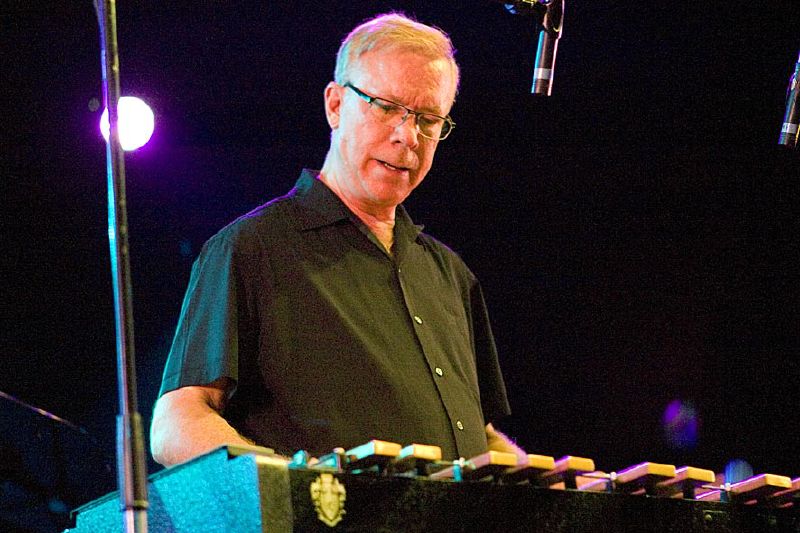
Burton’s orchestration techniques emphasize linear counterpoint and timbral transparency, exploiting the vibraphone’s unique sustain characteristics and its timbral compatibility with guitar to create a distinctive chamber jazz sound. His voicings typically employ open position with wide intervals, often spanning two or more octaves, allowing individual lines to be heard clearly without harmonic muddiness. Burton exploits the vibraphone’s four-mallet capability to voice full chords independently, creating self-sufficient harmonic statements that don’t require additional harmonic support from other instruments. The pairing of vibraphone with electric or acoustic guitar in his arrangements creates composite timbres where the attack characteristics complement each other—guitar’s immediate transient with vibes’ gradual decay—producing a sound that is neither entirely percussive nor entirely sustained. His contrapuntal approach features two-part inventions between vibraphone and guitar where both instruments function as equal melodic voices, trading phrases and interweaving lines in manner reminiscent of Bach keyboard works. Burton employs heterophonic textures where both instruments play the same melodic material with slight rhythmic variations, creating a blurred unison that adds depth without harmonic complexity. His use of register exploits the vibraphone’s full range from bass notes providing harmonic foundation to bell-like treble tones for melodic statements, while guitar occupies the middle register as harmonic filler. Rhythmic notation in Burton’s arrangements often incorporates odd meters and metric modulation, with 5/4 and 7/8 time signatures used naturally rather than for intellectual complexity. His dynamic architecture relies on textural thinning and thickening rather than volume changes, with passages alternating between single-line counterpoint and full chordal sections. Burton’s treatment of the rhythm section emphasizes bass and drums as melodic participants rather than purely timekeeping functions, with the bass often providing countermelodies against the vibraphone and guitar. Instrumental combinations in his arrangements frequently feature vibraphone doubled with piano at the unison, creating a composite attack where piano’s hammer and vibraphone’s mallet blend into a single articulated event. A signature technique involves using the vibraphone’s pedal to create sustained harmonic washes over which guitar articulates melodic figures, reversing the traditional roles of melodic and harmonic instruments. His approach to form often features through-composed structures that avoid conventional jazz head-solo-head patterns, instead creating continuous development that blurs boundaries between composition and improvisation. Burton’s influence on ECM Records’ aesthetic is evident in his spare, transparent textures that leave considerable negative space, allowing each note to resonate fully before the next arrives.

Top Albums

Gary Burton - “The Time Machine” (1966)

Burton’s arrangements for his quartet demonstrate his unique approach. The charts feature unusual timbral combinations and sophisticated counterpoint. What makes these arrangements notable is their freshness—Burton created new sounds through creative instrumentation. His arrangement concepts influenced chamber jazz and ECM Records aesthetic. The work demonstrates that sophisticated arranging doesn’t require large forces.

Gary Burton & Chick Corea - “Crystal Silence” (1972)

Burton’s duo arrangements with Corea showcase his chamber music approach. The charts create fullness with just two instruments through contrapuntal writing. What’s particularly impressive is how Burton’s arrangements maintain interest without bass or drums. The interplay between vibes and piano demonstrates Burton’s gift for creating musical conversations. The album influenced duo improvisation and minimalist jazz arranging.

Gary Burton Quartet - “Whiz Kids” (1986)

Burton’s arrangements featuring young musicians including Makoto Ozone demonstrate his continued evolution. The charts incorporate contemporary elements while maintaining his essential approach. What makes these arrangements special is their balance between structure and freedom—Burton provides frameworks that inspire rather than constrain. The work demonstrates Burton’s gift for bringing out young musicians’ best qualities through intelligent arranging.