Jazz arranging · Hard Bop, Modal & Post-Bop
QuincyJones
b. 1933 arranger · composer · orchestrator
Jones's arranging style evolved from bebop-influenced jazz in the 1950s to sophisticated soul-jazz and eventually pop…
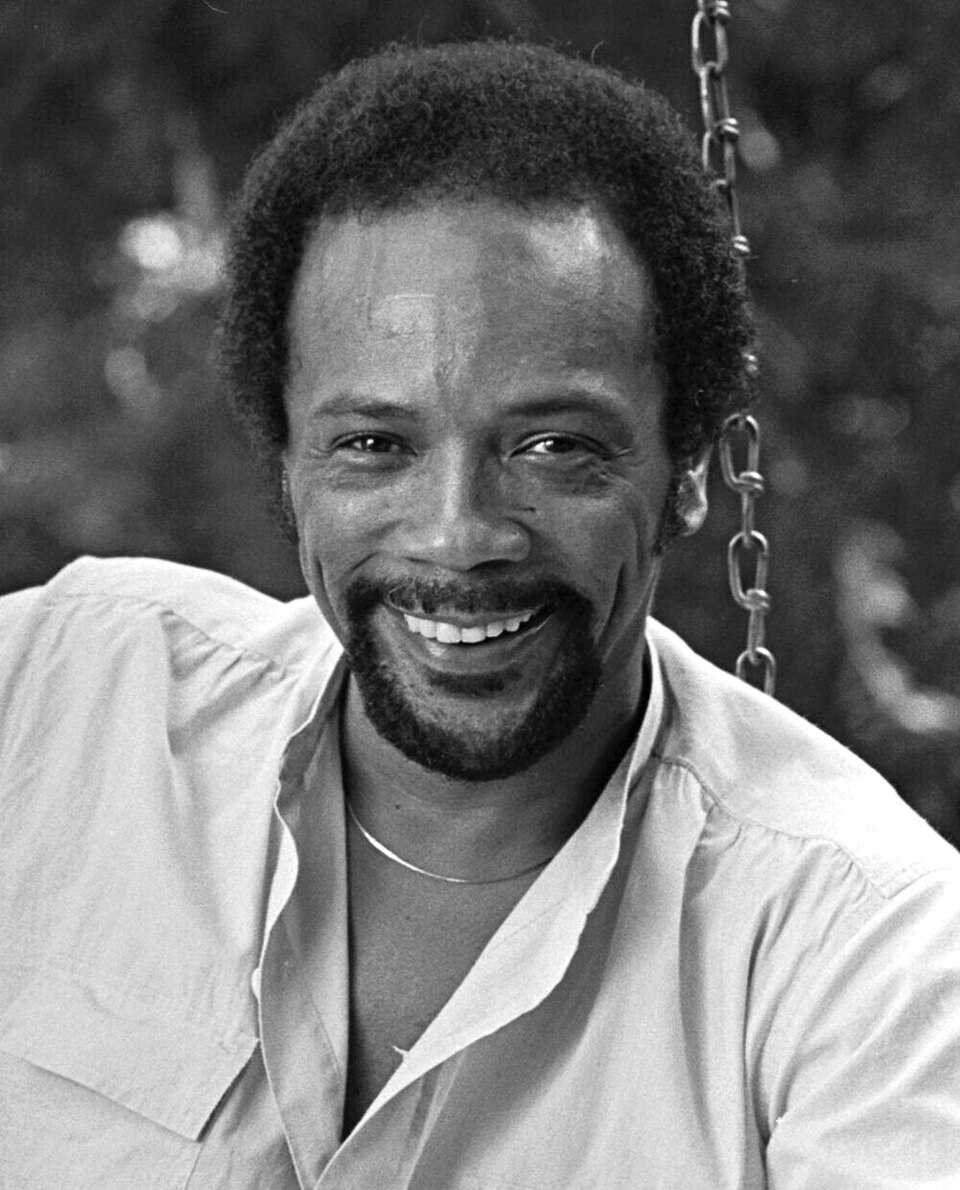
.jpg)
- Predominant era
- Hard Bop, Modal & Post-Bop
- Lifespan
- b. 1933
- Signature
- expansive register
Bio · 32 words
Quincy Delight Jones Jr. was born in Chicago and grew up in Seattle, where he studied trumpet and composition. He toured with Lionel Hampton's band as a teenager before studying at Berklee.
01
Musical style
Sound DNA
Five shared dimensions make the arranger’s musical priorities visible at a glance.
Iridescent
Instrumental color leads the design.
Compact
Ideas arrive in tightly packed frames.
Expansive
Wide spans define the orchestral frame.
Layered
Several musical planes coexist.
Propulsive
Rhythm actively drives the architecture.
02
Orchestration
Technique deck
Select a card to spotlight a device drawn from this arranger’s orchestral language.
03
Music first
Scores & orchestras
Switch recordings to compare how this arranger’s musical priorities shape each orchestral profile.
This Is How I Feel About Jazz · 1957
Sermonette
Jones's arrangements for his own big band showcase his early style, featuring Art Farmer, Phil Woods, and Herbie Mann.
Listen forNotice how register shapes the orchestral profile.
Find listening example on YouTubeProfile derived from the arranger’s documented style and recording notes; exact instrumentation is not asserted.
Li'l Ol' Groovemaker...Basie! · 1963
For Lena and Lennie
Jones arranged this entire album for Basie, demonstrating his mastery of the Kansas City tradition.
Listen forNotice how register shapes the orchestral profile.
Find listening example on YouTubeProfile derived from the arranger’s documented style and recording notes; exact instrumentation is not asserted.
It Might as Well Be Swing · 1964
Fly Me to the Moon
Jones's arrangements perfectly marry Sinatra's phrasing with Basie's band.
Listen forNotice how register shapes the orchestral profile.
Find listening example on YouTubeProfile derived from the arranger’s documented style and recording notes; exact instrumentation is not asserted.
04
Start here
Three essential albums
One line each—enough context to choose the next listen.
- 01 1957 This Is How I Feel About JazzQuincy Jones Jones's arrangements for his own big band showcase his early style, featuring Art Farmer, Phil Woods, and Herbie Mann.
- 02 1963 Li'l Ol' Groovemaker...Basie!Count Basie Orchestra Jones arranged this entire album for Basie, demonstrating his mastery of the Kansas City tradition.
- 03 1964 It Might as Well Be SwingFrank Sinatra & Count Basie Jones's arrangements perfectly marry Sinatra's phrasing with Basie's band.