Jimmy Heath (1926-2020)

Biography

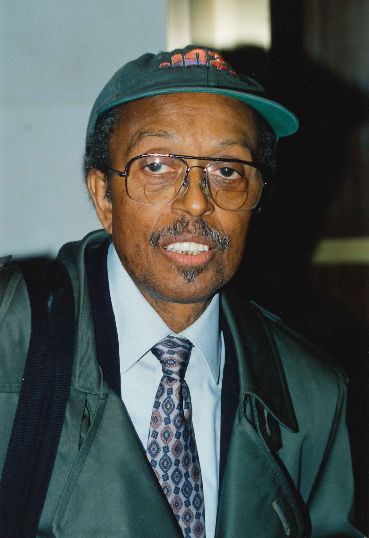
James Edward “Jimmy” Heath was born in Philadelphia into a musical family (brothers Percy and Albert were also jazz musicians). He played with Dizzy Gillespie, Miles Davis, Gil Evans, and many others while establishing himself as a major composer and arranger. Heath composed standards including “C.T.A.” and “Gingerbread Boy.” He formed the Heath Brothers with Percy and Albert, and later taught at Queens College. Heath received NEA Jazz Master honor and continued performing until shortly before his death at age 93. His seven-decade career demonstrated sustained creativity and commitment to jazz education. Heath’s influence on hard bop composition and arranging was profound.

Musical Style

Heath’s arranging style combined bebop sophistication with blues roots and compositional rigor. His arrangements featured clear structures with sophisticated harmonic movement. Heath had a gift for writing melodies that were both complex and memorable—his tunes had bebop’s harmonic richness yet remained singable. His arrangements for his own groups and others demonstrated understanding of how to feature soloists while maintaining ensemble interest. Heath’s voicings were influenced by his experience as a saxophonist, creating rich yet transparent textures. His style represented Philadelphia’s hard bop tradition—sophisticated, blues-rooted, and uncompromising in musical standards. Heath’s arrangements always swung hard while maintaining intellectual substance.
Orchestration Techniques

Heath’s voicings demonstrate bebop-derived close-position structures with chromatic alterations, typically employing diminished seventh chord passing tones to create smooth voice leading between dominant structures. His brass writing utilizes cup mutes extensively, creating a warm, blended sonority that supports saxophone lines without competing for frequency space. Sectional soli in Heath’s charts employ five-part voicing with the lead doubled at the lower octave, producing the characteristically full Philadelphia sound with enhanced projection. Contrapuntal elements include bebop-style countermelodies that mirror the main line in rhythmic diminution or augmentation, creating call-and-response between written and improvised sections. His use of pedal tones features prominently, with bass or baritone saxophone sustaining root positions while upper voices move through ii-V-I progressions, grounding complex harmonic movement. Register distribution follows bebop convention, with trumpets in their brilliant upper-middle range (written C5 to F5) and saxophones occupying the warm middle range for maximum melodic projection. Rhythmic devices include anticipatory figures where ensemble entrances occur on the “and” of four, creating forward momentum that propels into downbeat melodic statements. Dynamic architecture in Heath’s arrangements employs gradual builds through increasing rhythmic density—eighth notes become sixteenth-note runs—rather than solely through volume increase. Tutti passages feature parallel motion in thirds with chromatic passing tones connecting diatonic targets, maintaining harmonic clarity while adding bebop chromaticism. His signature technique involves writing ensemble figures that double the rhythm section hits precisely, creating unified rhythmic statements where horns and rhythm section function as single unit, producing the characteristically tight hard bop ensemble sound.

Top Albums

Jimmy Heath - “Really Big!” (1960)

Heath’s arrangements for large ensemble showcase his command of big band writing. His charts feature sophisticated harmonies with strong melodic content and hard bop intensity. What makes these arrangements remarkable is their combination of complexity and swing—Heath writes challenging passages that nonetheless groove hard. His composition “Big ‘P’” demonstrates his gift for creating exciting, hard-driving arrangements. The voicings are dense yet clear, showing Heath’s understanding of orchestration.

The Heath Brothers - “Marchin’ On” (1975)

Heath’s arrangements for his family band demonstrate his versatility. Working with Percy’s bass and Albert’s drums, Heath creates arrangements that honor bebop traditions while incorporating contemporary elements. What’s particularly notable is how Heath’s arrangements adapt to the specific personnel—he writes for these particular musicians rather than creating generic charts. His composition “Smilin’ Billy Suite” showcases his gifts in extended form, demonstrating that bebop concepts could sustain longer developments.

Jimmy Heath - “Little Man Big Band” (1992)

Heath’s later big band arrangements prove his continued evolution. His charts maintain bebop foundations while incorporating modern touches. What makes these arrangements fascinating is their maturity—Heath’s decades of experience result in arrangements of remarkable economy and effectiveness. His arrangement of “Without You, No Me” demonstrates how sophisticated arranging and emotional directness coexist. The album shows Heath remained vital and creative into his 60s and beyond.