Jazz arranging · Swing & the Big Band Era
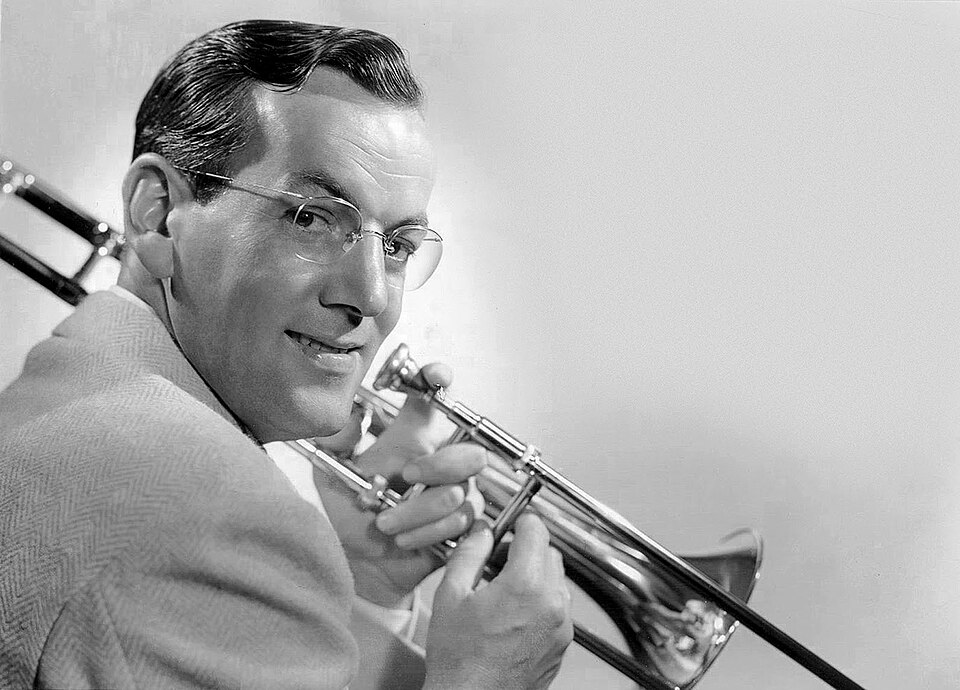
GlennMiller
1904–1944 arranger · composer · orchestrator
Miller's arranging style emphasized smooth, blended ensemble sound over individual soloists, creating a "sweet" swing that…

- Predominant era
- Swing & the Big Band Era
- Lifespan
- 1904–1944
- Signature
- iridescent color
Bio · 35 words
Born in Clarinda, Iowa, Alton Glenn Miller studied trombone and worked professionally from his teenage years. He played trombone in several bands including Ben Pollack's and the Dorsey Brothers Orchestra while developing his arranging skills.
01
Musical style
Sound DNA
Five shared dimensions make the arranger’s musical priorities visible at a glance.
Iridescent
Instrumental color leads the design.
Compact
Ideas arrive in tightly packed frames.
Expansive
Wide spans define the orchestral frame.
Transparent
Individual lines stay easy to follow.
Elastic
The rhythmic feel expands and contracts.
02
Orchestration
Technique deck
Select a card to spotlight a device drawn from this arranger’s orchestral language.
03
Music first
Scores & orchestras
Switch recordings to compare how this arranger’s musical priorities shape each orchestral profile.
The Popular Recordings · 1938-1942
In the Mood,
This collection includes Miller's biggest hits featuring his arrangements: "In the Mood," "Moonlight Serenade," "Chattanooga Choo Choo," and "A String of Pearls."…
Listen forNotice how color shapes the orchestral profile.
Find listening example on YouTubeProfile derived from the arranger’s documented style and recording notes; exact instrumentation is not asserted.
The Memorial Album · 1943-1944
St. Louis Blues March
Miller's military band arrangements show him adapting his style for service context while maintaining musical standards.
Listen forNotice how color shapes the orchestral profile.
Find listening example on YouTubeProfile derived from the arranger’s documented style and recording notes; exact instrumentation is not asserted.
In the Digital Mood
In the Digital Mood
The reformed Miller orchestra playing original arrangements with modern recording technology reveals details obscured in original 1940s recordings.
Listen forNotice how color shapes the orchestral profile.
Find listening example on YouTubeProfile derived from the arranger’s documented style and recording notes; exact instrumentation is not asserted.
04
Start here
Three essential albums
One line each—enough context to choose the next listen.
- 01 1938-1942 The Popular RecordingsGlenn Miller Orchestra This collection includes Miller's biggest hits featuring his arrangements: "In the Mood," "Moonlight Serenade," "Chattanooga Choo Choo," and "A String of Pearls."…
- 02 1943-1944 The Memorial AlbumGlenn Miller and the Army Air Force Band Miller's military band arrangements show him adapting his style for service context while maintaining musical standards.
- 03 — In the Digital MoodGlenn Miller Orchestra The reformed Miller orchestra playing original arrangements with modern recording technology reveals details obscured in original 1940s recordings.