Jazz arranging · Swing & the Big Band Era
AndyKirk
1898–1992 arranger · composer · orchestrator
As a bandleader rather than primary arranger, Kirk's contribution was creating the environment where great arrangers…
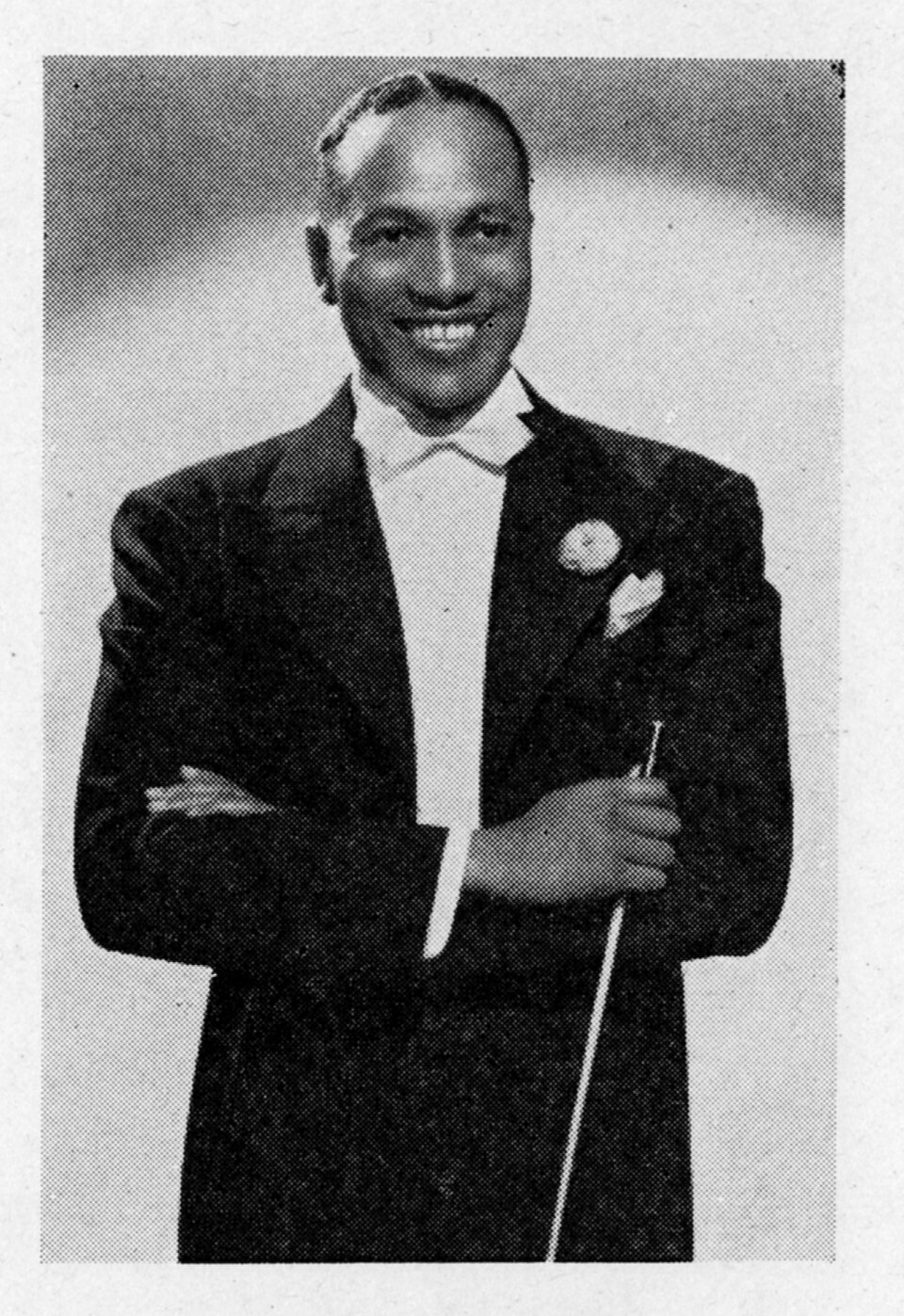

- Predominant era
- Swing & the Big Band Era
- Lifespan
- 1898–1992
- Signature
- varied color
Bio · 30 words
Andrew Dewey Kirk was born in Newport, Kentucky, and grew up in Denver, Colorado. He played tuba and bass saxophone before switching to saxophone and eventually becoming primarily a bandleader.
01
Musical style
Sound DNA
Five shared dimensions make the arranger’s musical priorities visible at a glance.
Varied
Contrasting families shape the sound.
Balanced
Space and activity stay in balance.
Layered
Registers work as distinct layers.
Layered
Several musical planes coexist.
Elastic
The rhythmic feel expands and contracts.
02
Orchestration
Technique deck
Select a card to spotlight a device drawn from this arranger’s orchestral language.
03
Music first
Scores & orchestras
Switch recordings to compare how this arranger’s musical priorities shape each orchestral profile.
Walkin' and Swingin' · 1929-1940
Mess-a-Stomp
While most arrangements on this compilation were by Mary Lou Williams, Kirk contributed several charts and his leadership shaped everything the band…
Listen forNotice how color shapes the orchestral profile.
Profile derived from the arranger’s documented style and recording notes; exact instrumentation is not asserted.
A Mellow Bit of Rhythm · 1936-1941
McGhee Special
This collection includes Kirk's arrangement work alongside Williams's charts, showing the contrast between Kirk's simpler approach and Williams's sophistication.
Listen forNotice how density shapes the orchestral profile.
Profile derived from the arranger’s documented style and recording notes; exact instrumentation is not asserted.
The Lady Who Swings the Band · 1936-1942
The Lady Who Swings the Band
While this album primarily showcases Mary Lou Williams's arrangements and playing, it demonstrates Kirk's most important contribution—recognizing Williams's genius and giving her…
Listen forNotice how register shapes the orchestral profile.
Profile derived from the arranger’s documented style and recording notes; exact instrumentation is not asserted.
04
Start here
Three essential albums
One line each—enough context to choose the next listen.
- 01 1929-1940 Walkin' and Swingin'Andy Kirk and His Twelve Clouds of Joy While most arrangements on this compilation were by Mary Lou Williams, Kirk contributed several charts and his leadership shaped everything the band…
- 02 1936-1941 A Mellow Bit of RhythmAndy Kirk and His Twelve Clouds of Joy This collection includes Kirk's arrangement work alongside Williams's charts, showing the contrast between Kirk's simpler approach and Williams's sophistication.
- 03 1936-1942 The Lady Who Swings the BandAndy Kirk and His Twelve Clouds of Joy While this album primarily showcases Mary Lou Williams's arrangements and playing, it demonstrates Kirk's most important contribution—recognizing Williams's genius and giving her…